Monday, June 20, 2011

helmets must be worn

In these changing and uncertain times, it's good to know that there are certain things that are constant, unchanging and reliable. Like the desire of certain young members (as it were, if you will, etc.) of the male gender to draw stylised representations of the male generative organ in mural form in public places, or, to put it another way, to daub giant spurting cocks on things. Here's a rather excellent example of the genre, which has appeared at some point in the last couple of weeks on a fence along the footpath running between Cooks Close and Badgers Close in Bradley Stoke:


This is on the way from the office to the little Tesco Express on Pear Tree Road; luckily I had Andy (and, more importantly, Andy's phone camera) with me today to capture it for posterity.

There is a long and proud tradition of this sort of primitive spray-can graffiti, of course. A new sub-genre of cock graffiti, though, is the super-giant cock designed to be viewed from above, ideally by the Google Earth cameras. There have been several examples of this, notably in Berkshire, Teesside, Southampton, Pennsylvania and, most splendidly of all, Hamilton in New Zealand where students have created no less than six of varying shapes and sizes - see if you can spot them all. None of them have the, hem hem, dynamism of the fence one, though, i.e. they haven't got all spunk coming out the end. Disappointing.

Obviously the best excuse is that the irresistible desires to do these things are atavistic echoes of ancient fertility symbols like the Cerne Abbas Giant - this particular great big public drawing of a cock (and on the bonk as well) being OK as it's all heritage-y and historical and shit. Interestingly, on more than one occasion persons unknown have attempted to apply a similar appendage to the much more modest Long Man of Wilmington - once rather disappointingly and once rather more impressively for the 2010 summer solstice (the photo below is of Cerne Abbas though).

Sunday, June 19, 2011

can iFix it; yes iCan

Another music-related public service announcement, offered in the hope that it may be of use: you may, one day, find yourself in the position of not having access to your computer's iTunes library, and therefore needing to recover it from a suitably-synchronised iPod (if you haven't got one of these, then you're boned).

I find myself in this position this week as my laptop (it's a Compaq Presario, since you ask) is currently on the blink. I don't think there's any likelihood of data loss, as I think it's just a duff LCD backlight that needs replacing, but I need my iTunes library to sort out some tunes for the wedding next weekend. The laptop still worked with an external monitor plugged into it, but I didn't dare hang onto it as the one-year warranty was about to expire and I didn't want to end up having to pay for the repairs. I didn't have a chance to clear all the kiddy porn off it, but let's hope they just don't look in that folder, eh?

So anyway, that one has been packed off to the HP repair centre; luckily Hazel has just purchased a new laptop (it's a Samsung RV511, since you ask) so I have a virgin iTunes library to play with. It turns out that getting all the music off my 60GB iPod isn't that difficult, you just have to know what to do. Comprehensive instructions can be found here, but basically you just need to do the following:
  • plug the iPod into the laptop
  • when iTunes starts, choose NOT to synchronise the iPod with the iTunes library; this is VERY important as otherwise you will end up with an empty iPod
  • click on the iPod in the left pane and ensure that "Enable Disk Use" is checked in the right pane; this will make the iPod visible to Windows Explorer
  • in Windows Explorer, click on the device and ensure that "View hidden files and folders" is selected (it's under one of the Folder Options tabs)
  • find the "Music" folder and copy it to somewhere on the computer (if you've got a lot of music this will take a while)
  • once it's finished find where you copied it to and adjust the folder properties so that it's not hidden
  • then drag and drop the folder into iTunes (again this will kick off an import process that may take a while)
You should then find you have recovered all your music. It worked for me anyway.

get busy livin' or get busy Brian

Having scoffingly questioned Brian Haw's commitment to the cause when I visited Parliament Square the other week and found him conspicuous by his absence, I now discover that he had a fairly reasonable excuse, which is that he was in Germany in the early stages of dying at the time, and completed the job today. Sorry about that.

I should add that while I salute his persistence in his desire to hold the government to account for the Iraq war, and to uphold the principles of freedom of speech and protest that allowed him to do so, I note with weary lack of surprise that he was driven to do so by "his evangelical Christian faith". Still, even a stopped clock, and so on and so forth.

celebrity lookeylikey of the day

American golfer, twice nearly-man on the PGA tour this season, and one of the men currently tied for 15th place after three rounds of the US Open Webb Simpson, and actor and occasional self-harmer Owen Wilson. As with the Lucas Glover one, you've got to get past the hat. Wilson's nose looks slightly more like a cock, as well. Also, "Webb Simpson" is an anagram of "Owen Spimbbs", so make of that what you will.

Friday, June 17, 2011

that is rather slippery of you, agent sainsbury

I was in my local Sainsbury's the other day when I noticed a peculiar thing: I'd picked up a box of red wine and I thought it looked a bit squarer and squatter than usual. Closer examination revealed the reason for this: it was only 2.25 litres instead of the usual 3, or, to put it another way, the equivalent of three bottles instead of the usual four. This seems to be a general change of policy for Sainsbury's as most of the other boxes had been changed to the new smaller size as well. Rather cheekily, though, the prices didn't seem to have been adjusted down by the requisite 25% (for instance £12.99 for the Australian Merlot is the equivalent of £17.32 for 3 litres), nor was there any signage up saying WARNING: SMALLER BOXES or anything like that. I deem this to be a rather sneaky money-making exercise on Sainsburys' part, and, more importantly, a bid to restrict my wine consumption. This will not do.

Purely for research purposes I dropped into Tesco yesterday to check out the competition, and I see no evidence that Tesco are adopting the same policy, I'm glad to say. Just on the off-chance that this was just a clear-out of old stock I picked one up; compare the relative shapes and sizes below.


[Quick footnote: I meant to link for comparison purposes to this earlier post comparing the (formerly) standard 3-litre pack to the gargantuan 5-litre one I acquired in France. Surely bigger is the way to go, if only to increase the wine/packaging ratio? It's more environmentally friendly, after all.]

stitch this

One's jeans yielding under the immense outward pressure imposed in the groinal department and subsequently requiring repairs is one thing, but you don't really expect to have to sew up your shoes.

However, it appears that I have one foot bigger than the other, or possibly just more misshapen and abrasive than the other, because my shoes show an interesting and consistent pattern of wear, as the pictures below show.

Firstly, my knackered old Saucony running shoes. Note that the right heel (on the left as you look at it: come on, keep up) is ragged and worn whereas the left one is relatively OK.


Then my beloved black and yellow Vans - both heels are pretty fucked up on these, but the right one is worse.


Finally my Teva walking shoes - I purchased these only about 18 months ago, but I have worn them almost constantly since, so they've got a few miles on the clock. And, as you can see, it's the right heel that has started to disintegrate.


But how to fix it? Well, various gluing options occurred to me, but in the end the best thing to do seemed to be to get the old needle and thread out and sew them up. Not easy, as getting a needle in and out of a concave surface in a confined space requires a few contortions, and a certain amount of swearing. But the end results are fairly tidy, I think, and hopefully will stave off further damage for a while. No idea how long it'll hold together, but we'll see.


Other sewing news: while out gardening the other day and doing a bit of frenzied digging with my wrecking bar, I managed to catch myself in the left tit with the hooked end, tearing my shirt in the process, so that wanted fixing too.

Friday, June 10, 2011

duke, duke, duke, duke of ed, ed, ed

Apparently it's Unearned Privilege Week here in the UK. It's also National Food Safety Week and Naked Bike Ride Week (not particularly SFW, as you might imagine), but those (interesting as they are, particularly the nude cycling) are not my concern right here and now.

Firstly, Rowan Williams, the cuddly old bushy-eyebrowed Archbishop of Canterbury, leader of the Church of England and possible closet atheist, has been getting himself into trouble this week by having a pop at the government in a leading article in the New Statesman (which he was guest editing at the time). Strip away all the religious flim-flam and bafflegab and the core message happens to be one I broadly agree with - the government's talk about localism, empowerment and the Big Society is just a laughably transparent smokescreen for massive spending cuts and the usual Tory policy of ruthlessly fucking the poor and underprivileged and basically anyone who didn't go to Eton and hasn't got a moat. On the other hand, I don't really see why the Archbish gets a platform to put forward his political views, however sensible they might be in this particular instance, just because he might believe in some sort of imaginary Jewish space zombie.

Amusing too to see Tony Blair's response when questioned about it during his appearance on the Today programme the other day:
"The Government will say that they're very relaxed about it and get on with whatever they want to do."
It was, as I recall anyway, the 1997-onward New Labour government who coined the usage of "relaxed" in this context, along with, even more annoyingly, the now-ubiquitous "passionate", so he should know. In any case, I guess the old adage about the Church of England being "the Tory party at prayer" may not apply any more.

Secondly, you surely won't have failed to notice that it's the Duke of Edinburgh's 90th birthday this week. To commemorate this, the irascible old codger granted an interview to the BBC, in the person of hard-hitting interviewer and 2010 Rear Of The Year winner Fiona Bruce. Now you might have thought that Fiona would give him an easy ride, but let me tell you.....wait, no, you'd have been absolutely right, not entirely surprisingly. Even provided with a series of pathetically easy lobs to put away, though, the Duke managed to be a pretty surly, unhelpful and generally charmless interviewee who clearly regarded the whole thing as a dreadful imposition.

Actually the Duke of Edinburgh is a pretty prime example of how absurd feudal traditions like monarchy are corrosive and harmful to everyone, not just us poor downtrodden subjects but those who, by accident of birth, end up on the other side of the fence as well. A reasonably successful naval officer during the Second World War, as soon as he got married to the heir to the British throne he was faced with having to give up his chosen career and basically contemplate the prospect of 50+ years of enforced idleness as the monarch's consort, traipsing round the world two steps behind the Queen meeting tongue-tied dignitaries and pretending to be interested in stuff. No wonder he dropped the ball a few times.

This was just one of the subjects that didn't really get an airing, though, along with the Duke's strained relationship with his eldest son, and, of course, whether or not he had Princess Diana rubbed out.

Tuesday, June 07, 2011

what's the story?

As I alluded to last time, I've got a bit of whisky blogging to catch up on, so here's another one. It wasn't so long since I sampled (and liked) the entry-level (and dirt cheap) Ledaig from the Tobermory distillery on the Isle of Mull; well, here's their standard product, called, as you might expect, Tobermory.

It's actually not quite as simple as that, because the old 40% brew in the green flasky bottles was always subject to mixed reviews. The recent revamp has seen the strength increased to 46.3% and a bit of a styling rethink as well. Now I should point out that I've never tried the old dumpy green version, so I've got no frame of reference for comparisons; I'll just have to go with what I've got.

The Ledaig is the peated expression, whereas this is unpeated, so you know (broadly at least) what to expect. Sure enough there's very little peat or smoke when you have a sniff; that 46.3% does give you quite a hot whack of raw spirit up the nose though. It's less aggressive than that when you drink it, though, and it does have (smoke aside) some of the same characteristics as the Ledaig, most notably a sort of salty/vegetably thing - like, say, cauliflower cheese with anchovies in it, or marmite-smeared parsnips.

Unpeated malts have to try harder to be interesting, I reckon, because you can't just mask uninteresting spirit by giving the drinker a bit peaty knee in the balls until his eyes water; in that context this is excellent stuff, sweet and approachable but with some hidden depths that encourage a repeat visit. I like it.

Monday, June 06, 2011

you keep using that word; I do not think it means what you think it means

I caught a bit of the lawyers' opening press statements in the Dominique Strauss-Kahn case today; I was driving home at the time, with the radio tuned to Radio 4, as befits any sane and civilised member of the human race, when I heard a couple of clips on PM. What specifically caught my ear was the clip of prosecution lawyer Kenneth Thompson, and even more specifically the bit which starts at about 0:17 in this clip, or alternatively about 0:59 in this one, transcribed here:
The suggestion by defence counsel that this was consensual is preponderous - the victim wants you to know that all of Dominique Strauss-Kahn's power, money and influence throughout the world will not keep the truth about what he did to her in that hotel room from coming out.
Now it appears (and this was news to me) that "preponderous" is actually a word (meaning pretty much the same as "ponderous", but with a pointless extra three letters), but at the same time it's clear that what Kenneth Thompson meant was "preposterous".

A Google search for "preponderous" reveals a few instances where it might be being correctly used, but just as many where it's used in place of "preposterous" (here and here, for instance) or alternatively in place of "preponderance", like here and here. Inconceivable!

Sunday, June 05, 2011

stag nation

While I'm on the subject of photo galleries I should also draw your attention to this one, which is a collection of photos taken at my recent stag weekend up in mid-Wales. Since the lovely Hazel and I are getting hitched on June 25th, it seemed prudent to take care of the stag & hen partying a few weeks in advance, thereby avoiding the sort of scenario which only ever occurs in comedy films or adverts, i.e. being sellotaped, naked and covered in jam, to the guard's van of a train to Inverness and having to make one's way back to the wedding venue in the nick of time.

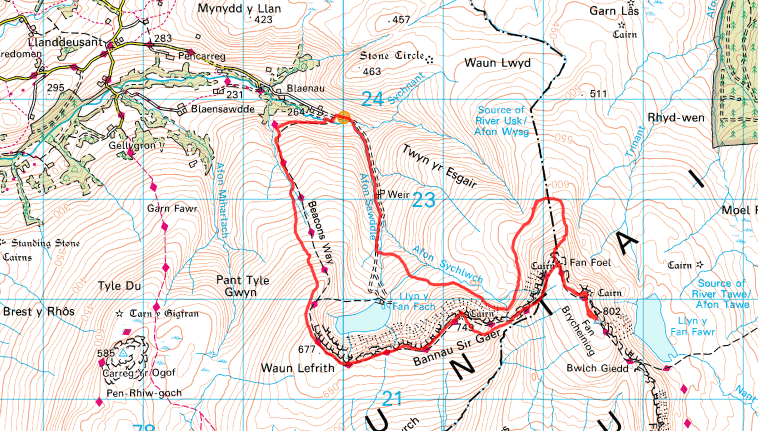
So, anyway, in order to conduct the requisite stagular activities I hired us a bunkhouse (highly recommended, by the way, as it was perfect for our requirements) just outside Trecastle and set about planning some outdoorsy walking activities. I did consider some more orthodox stag activities like go-karting or clay pigeon shooting, but in the end I just decided to do what I would want to do if I were there on my own; inevitably this involved climbing a mountain. What we ended up doing was parking up near Llanddeusant village (here) and heading up onto the Black Mountain, as previously climbed by me and Hazel (but from the other side) here. Unfortunately the weather, while starting off fairly promising, soon degenerated into a typically mid-Walesesque foggy pissy drizzle, which spoiled what would otherwise have been some spectacular views. We had to skip scouting around trying to find the source of the Usk, which is apparently on the northern slopes, as well. Oddly, while both the Wye and the Severn rise within a mile or two of each other on the slopes of Plynlimon, both the Usk and Tawe rivers rise within a similarly small distance of each other here.


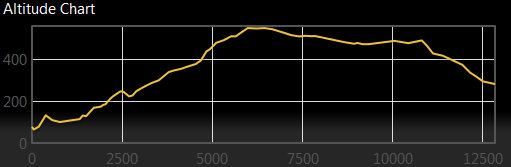
But we survived, which is the main thing, after all. The GPS-captured route info for the walk can be found here, and the altitude profile here. Some more general stag weekend photos, including some where a fair amount of drink had been imbibed (but nonetheless fairly safe for family consumption) can be found here. Many thanks to Doug, Andy, Robin, Jim, Mark, Ray, Martyn, Ian, Andy and Richard for indulging my strange habits and making it a throroughly enjoyable weekend.

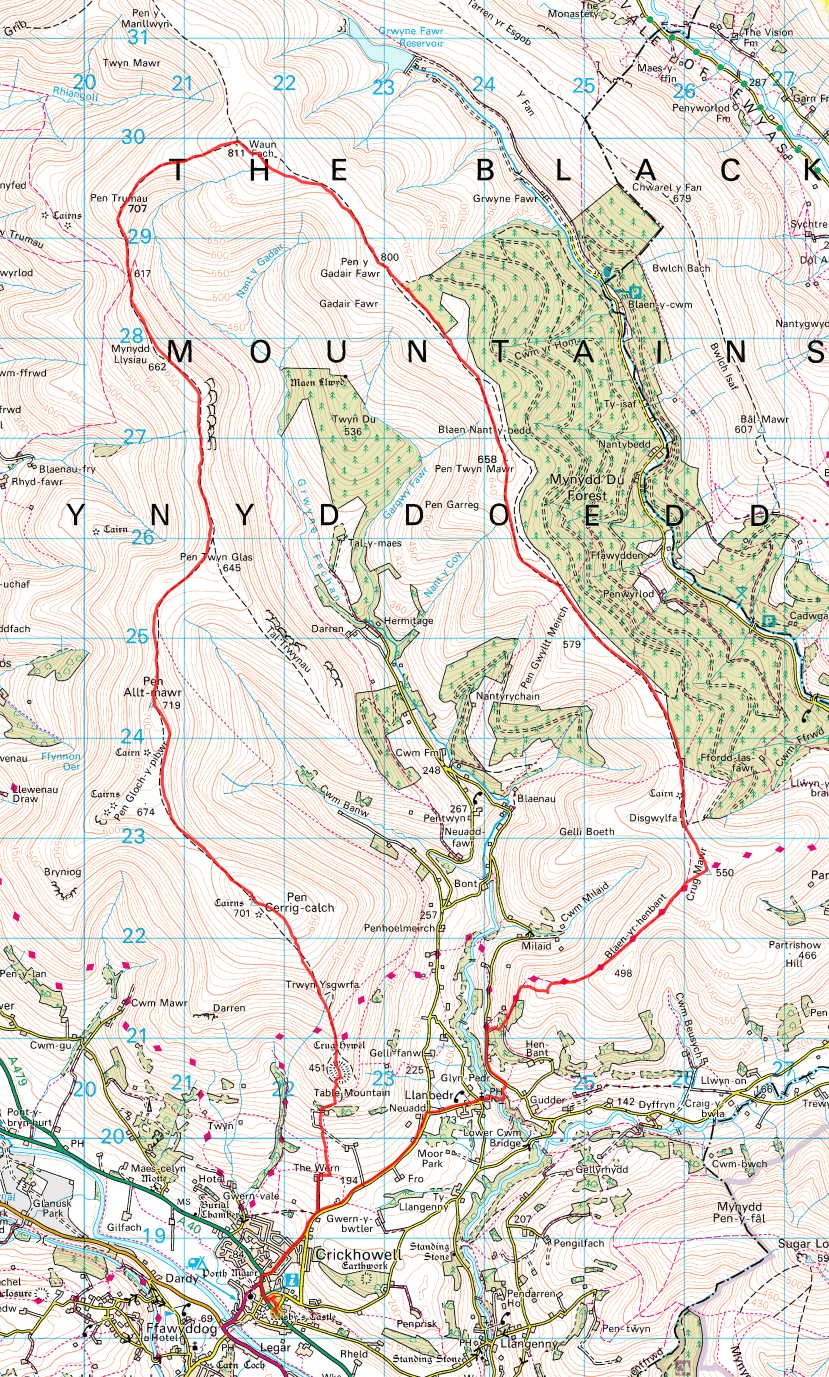
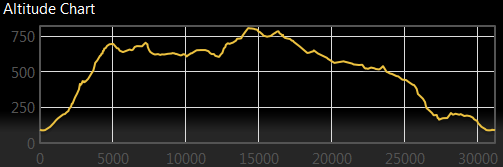
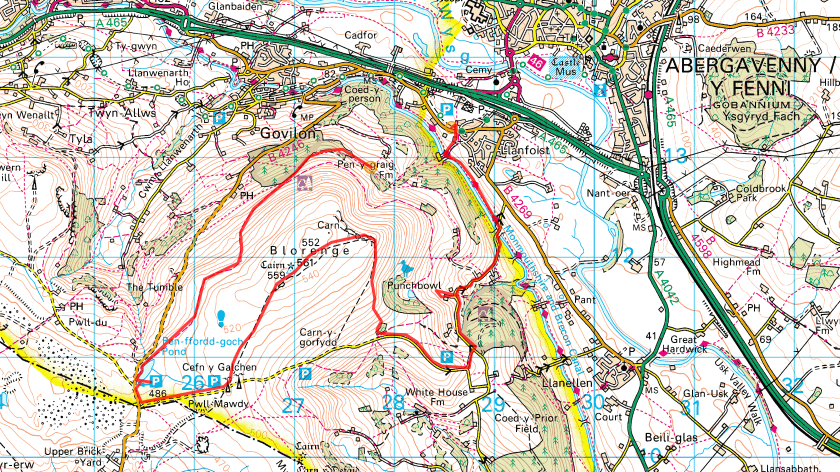
I also had a bit of a clear-out of the old track logs on the GPS and found a couple of other things of potential interest, specifically the walks I did around the Black Mountains (track here, altitude here) and the communal jaunt up the Blorenge (track here, altitude here). The Blorenge one is slightly incomplete as I think the GPS lost the signal towards the end, but you can hopefully join the ends up for yourself.

eye caramba

The lovely Hazel and I went up to London for a quick visit this weekend; in addition to popping in and visiting my sister we did some bog-standard touristy stuff. The thing about the bog-standard touristy stuff, though, is that because we native Brits are a bit sniffy and superior about that sort of thing and scoff about all these places being overrun by fat Americans and Japanese tourists with 23 cameras each, we rarely actually embrace touristdom and go and experience them.

So we decided to get over ourselves and go on the London Eye - which I'd seen in the flesh, as it were, before, in somewhat different circumstances - at New Year 2008 - but never been on. 30-odd quid a head will get you a Fast Track ticket whereby you can avoid most of the queuing with the great unwashed (you can save yourself a tenner if you don't mind doing that), and it's really quite impressive. Short of being in a helicopter I can't imagine anything affording better views of London, and it's considerably less scary than being in a helicopter.

We also had a nose round outside the Houses of Parliament, Westminster Abbey and Parliament Square (it must have been Brian Haw's day off, though, as I didn't see him). Later in the day we visited the less-frequented Bunhill Fields Gardens (over near Old Street tube station). This contains the graves of some quite famous people (William Blake and Daniel Defoe among others), but also of the unfortunate Mary Page (wife of one of the Page Baronets, all of whom seem to have been called Gregory, strangely - that must have been fun at Christmas), the inscription on whose tomb bears repeating, for it reads:
Here lyes Dame Mary Page
Relict of Sir Gregory Page Bart
She departed this life March 4 1728
In the 56 year of her age
In 67 months she was tap'd 66 times
Had taken away 240 gallons of water
Without ever repining at her case
Or ever fearing the operation
Yikes. It is theorised - by modern medical types who like theorising about this sort of stuff - that she may have had something called Meigs Syndrome. Anyway, be that as it may, some touristy photographs can be found here.

Thursday, June 02, 2011

you take the high road

I haven't done a whisky post for a little while, and I've actually got a bit of a backlog of stuff to do, so here's the first one: this is Dalwhinnie.

Every distillery seems to claim some sort of superlative, biggest, smallest, oldest, tallest stills, most stills, et variously cetera. Dalwhinnie's claim is that it is the highest currently operating distillery in Scotland at 1073 feet above sea level. The official website sticks to a slightly weaselly "one of the highest of all distilleries", but I understand it really is the highest. You'll notice that the official website sits under the Diageo banner, and sure enough this is one of their Classic Malts range, as were a few previous ones in this series.

Anyway, Dalwhinnie's geographical location makes it a Highland malt, which should bode well as these are generally my favourites, since they combine the smokiness of the island malts with the rich sweetness of the Speysiders. It's the latter that dominates when you have a sniff - but for the slight whiff of smoke this could be something like a Cardhu as it has a sort of honeyed sweetness to it. The classic description of Dalwhinnie seems to compulsorily include the word "heather", but I don't eat a lot of heather so I wouldn't know about that. What it is is nice and rich and sweet (no doubt partly due to being bottled at 15 years old, rather unusually for an entry-level single malt, which are usually 10-12 years old) with just the faintest wisp of smoke in the background.

It's really very nice, but my preference would be for something a little more aggressive (without getting silly and turning into Ardbeg) and maybe dialling down the sweetness just a bit. If you did that you'd end up with something a bit like Ben Nevis or Oban or Clynelish, which would be an unalloyed Good Thing.

Just in case you can't make it out, the label on the neck of the bottle reads "The Gentle Spirit". This seems to be sailing pretty close to "the gentle dram", which has already been bagsied by Tomintoul; no doubt their respective lawyers got together, did lunch, and came to some agreement.

the last book I read

The Black Album by Hanif Kureishi.

It's the tail-end of the 1980s, and Shahid Hassan, a young Pakistani Muslim, has left his cosy and fairly privileged middle-class upbringing in Kent to enrol on a course at an anonymous North London college. Moving into his equally drab and anonymous lodgings, Shahid finds himself sharing a corridor with a selection of radical Muslim types, including the charismatic Riaz, who has all sorts of ideas about bringing decadent Western society into line.

At the same time Shahid finds his head turned by Deedee Osgood, a lecturer at the college and an intriguingly enigmatic Older Woman. Not only intriguingly enigmatic, as it turns out, but also very much available and only too happy to initiate Shahid into various things, not only sex but also the exciting world of new music and drugs that has become available during the Second Summer Of Love.

All of which is great, of course, but hardly compatible with the brand of increasingly puritanical fundamentalist Islam that Riaz and his sidekicks Chad, Hat, Sadiq, Tariq and Tahira are getting into, and are keen to co-opt Shahid into. Things are further complicated by the appearance of Shahid's brother Chili, the archetypal Armani-suited Thatcherite go-getter with all manner of shady projects on the go, one of them being an increasingly destructive vodka and cocaine habit.

Shahid is torn between the freedom and hedonism of his relationship with Deedee on the one hand, and solidarity with his Islamic brethren on the other. Unable to choose between them, he bounces around changing his allegiance depending on which of them he's with at the time, to the satisfaction of neither party. Things eventually come to a head when, in the aftermath of the fatwa against Salman Rushdie (in the wake of the publication of The Satanic Verses) the brotherhood decide to step up their campaigning by holding a public book-burning; Shahid's unenthusiastic reaction to this leads the brotherhood to decide to bring him back into the fold, one way or the other, and to bring Deedee and Chili into line at the same time, and Shahid finds himself having to finally make an irrevocable choice.

The Black Album was published in 1995, a time when (even though the first World Trade Centre attack had already happened by then) fundamentalist Muslims carrying out terrorist attacks might have seemed a threat not really worth worrying about. Obviously in the wake of 9/11 and 7/7 it all seems a bit more prescient. The mundane domestic roots of fanaticism are very well-drawn here: the close-knit immigrant community, the day-to-day experience of racism and abuse, more overt religious display as a defiant expression of "otherness". For all that, we never lose sight of how basically childish and silly it all is (at the same time as being genuinely dangerous) - the petty disagreements over scriptural interpretation, the la-la-la-fingers-in-ears refusal to consider other points of view, the general grinding humourlessness of it all.

The characters on the other side suffer a bit in comparison - because the Muslim brotherhood are representing a particular and well-defined worldview it doesn't matter so much that they're not particularly engaging characters, but we never really find out much about either Deedee or Chili to find out what makes them tick, despite them being on the "right" side of the argument (not that I'm advocating frenzied vodka-guzzling and cocaine-snuffling here, just not being a religious loony). The same could be said for Shahid, really.

So while (like its predecessor The Buddha Of Suburbia) this is very readable, has some interesting things to say about the second-generation immigrant experience, and is pretty funny in parts, it's hard to really get involved with. The Kureishi book I read that really did it for me is Intimacy, which is much shorter, non-race-specific and about as far from humorous as you can get.

The Black Album takes its name from the Prince album of the same name, one of the most famous "lost" albums (although it did get an official release in the mid-1990s, by which time everyone had a bootleg copy anyway). An attempt at a "harder" funk album after the eclectic stylings of Sign O'The Times, it contains the amusingly sweary Bob George among others, but was withdrawn by Prince a matter of weeks before its scheduled release date - oddly (given the drug use in the book) one rumour has it that Prince decided to scrap it after a bad ecstasy trip. The Black Album (the book) was also adapted for the stage by its author a couple of years ago.

that bit of halibut was good enough for Jehovah

I got doorstepped by the Jehovah's Witnesses this morning - slightly surprisingly given their status as comedy staple I think that's the first time that's ever happened to me. The last and, I think, only other time I've ever been called upon by grinning bible-wielding types was at my old flat in Bristol back in about 2005, and I seem to recall they were some other denomination.

Now for this to be a classic religion/atheism smackdown I should have invited them in and sought to get them to articulate why they believe what they claim to believe, and suggest applying a bit of critical thinking, as well as teasing out whence they derive their notions of morality, particularly with regard to things like blood transfusions.

Just to give you a sample of some of the stuff that can be found on the website, the science pages reveal what you might call a slightly à la carte approach, with regard to cosmology and evolution in particular. They seem to have hitched themselves firmly to the Intelligent Design bandwagon (Behe and Dembski are prominently mentioned), and make much of the "some scientists are also Christians" argument, although given that the JWs view other more orthodox Christians as heretics and most religious scientists are (at best) more orthodox Christians rather than JWs I'm not sure I completely follow the argument.

They also throw in some references to cosmological "fine tuning", which is pretty silly (as Douglas Adams famously pointed out) but not embarrassingly so, but then they stray into lunacy by recycling the argument which goes, broadly, like this: let's assume for the sake of argument that a first lady giraffe (or whatever, you choose) evolved, by whatever mechanism - however improbable that might be, imagine the chances of a first male giraffe evolving in exactly the same way, and the two happening to meet, as they would have to have done for the newly-formed species to survive. It's absurd! Therefore, presumably, evolution is refuted and everything in the Bible is true, those being the only two possible options.

The first place I saw this offered up was by banana-enthusiast Ray Comfort a couple of years ago, and he's spent the last couple of years re-hashing the same argument (under the guise of "just asking questions") despite having it explained to him in some detail again and again and again and again and again. If I was overseeing the JWs website I might consider quietly dropping that paragraph, to be honest.


But anyway, I was busy (working, in theory at least) and they seemed like a couple of nice fresh-faced young lads, and I didn't really have the heart, not to mention the time or the patience. In any case I'm not sure their hearts were really in it, as one of them volunteered "you're probably busy" before I had a chance to say it. So I accepted a leaflet (reproduced above) in lieu of the full-scale preaching, and it turns out that their local HQ is just a few roads away in Alway. It's not as impressive as the enormous US JW HQ which can be seen from the Brooklyn Bridge, but it is a lot nearer. There's another one in Pillgwenlly as well. They're everywhere!

Tuesday, May 24, 2011

cheer up, it's not the end of the world

As so often, what's so interesting about all the nonsense surrounding the latest Judgment Day prediction is not so much the specifics of the prediction, which is based on some loony numerology which you'd clearly have to be dumber than a bag of hammers to have believed, but the post hoc rationalisation employed by those who believed it in order to prevent their heads from imploding after we inevitably all woke up on May 22nd to find that we were all still here.


The notion of the "rapture", whereby the righteous and virtuous are all simultaneously hoovered up off the earth to everlasting glory and bliss at God's right hand on a given date was pretty much originated (or at least popularised) by a bloke called John Nelson Darby in the mid-19th century. After the salutary lesson of the Great Disappoinment in 1844, when the first attempt at attaching a specific date to it ended in predictably ignominious failure, those predicting the apocalypse have got a bit better at explaining away the series of failed predictions, and more importantly enabling the faithful to perform the necessary mental contortions to keep believing. The usual explanations include:
  • our devotion to preparing for the big day, and our fervent commitment to believing in it, have resulted in a stay of execution for everyone: praise be! This seems to have been the approach taken by the devotees of the barking UFO cult in the classic book When Prophecy Fails.
  • it really did happen, but in some subtle way that we aren't yet devout enough to understand. We must redouble our efforts, in order that we may get a second chance: praise be!
  • sorry guys, we got the maths wrong; this numerology stuff is tricky, you know. Here is a new date to prepare for: praise be!
In Harold Camping's case he's plumped for the third option (with perhaps just a smattering of the second): scarcely surprising in some ways as he's already been wrong about previous dates in 1988 and 1994. Your new date is apparently October 21st, so be sure and get your worldly affairs in order.

An even more amusing form of cognitive dissonance is that exhibited by those who ridiculed Camping for making Christianity look ridiculous, including, deliciously, Answers In Genesis - these are the people who not only run the ludicrous Creation Museum in Kentucky, but who are also planning to build a ruddy great replica of Noah's Ark elsewhere in the same state.

Lest you imagine that Ken Ham's insane carpentry posse are some bunch of freakish statistical outliers, boggle for a moment at the fact that a survey from last year reveals that 41% of Americans rate the likelihood of the second coming of Jesus happening by the year 2050 as "probable" or better, and 23% say it'll definitely happen.

Wednesday, May 18, 2011

the last book I read

A Good Man In Africa by William Boyd.

Morgan Leafy is a mid-ranking British diplomat in the fictional African country of Kinjanja. This is not exactly a prime posting, as his status-conscious superior Arthur Fanshawe seems only too painfully aware, but then again Morgan is not exactly prime diplomatic material, being a little too fond of a drink, chasing after bored expatriate wives and general work-shyness than in climbing the career ladder.

Morgan's deviousness and poor impulse control lead him into some awkward scrapes: firstly he catches a dose of the clap from his on-off native Kinjanjan girlfriend Hazel, and this leads to an ill-tempered encounter with abrasive Scottish doctor Alex Murray and an embarrassing evening with Fanshawe's daughter Priscilla - having pursued her vigorously (her general posh spoilt appallingness being mitigated in Morgan's eyes by her spectacularly pert breasts) he then has to fight her off on the very night she has decided will be, you know, The Night, deciding (wisely, for once) that any short-term gratification would be outweighed by the long-term consequences of giving the boss's daughter a dose. Needless to say she is none too happy about this and soon takes refuge in the arms of Dalmire, one of Morgan's diplomatic colleagues.

Morgan has other things to think about, though, as Fanshawe soon gives him a top-priority assignment - get to know Sam Adekunle, a local politician, businessman, landowner and general high-roller. Adekunle is intending to run for president in the forthcoming elections and the British want to make sure he's on-side in advance of that, to the extent of being prepared to offer a little light bribery, which should do the trick, because, well, your African loves shiny trinkets and the possibility of a trip on an aeroplane, doesn't he?

Well, actually it seems that Adekunle is a bit more sophisticated than that, and it becomes difficult to tell who's manipulating whom. Morgan soon resolves this by rather unwisely sleeping with Adekunle's British wife, Celia, and Adekunle promptly starts blackmailing him. It turns out that Adekunle would like a bit of bribery done as well, this time of the seemingly incorruptible Alex Murray, who is on the approval board for a piece of property development work that will make Adekunle a large sum of money as long as the deal is approved.

The trouble is, not only is Murray seemingly a pillar of dour upstanding prickly Scottish moral rectitude, but Morgan's attempts at striking up a friendship haven't gone well. Following the vexed encounter at the clap clinic Morgan has tried to enlist Murray's help in getting the body of one of Fanshawe's domestic staff, Innocent, removed from the grounds of the diplomatic residence after she's been struck by lightning. Not only does Murray refuse to help (as it's outside his jurisdiction), none of the other native staff want to help either until someone has paid for a local medicine man to exorcise the bad ju-ju left by the lightning god.

Things come to a head, as they inevitably will - Morgan makes a half-hearted attempt to fulfil his obligation to Adekunle by trying to bribe Murray during a round of golf, Murray naturally refuses and threatens to go to Fanshawe to tell him what's been going on. Meanwhile Adekunle has won the election, but there's some doubt as to whether the result will stick, as some local protest groups view Adekunle as a British stooge, and there seems a possibility of a military coup d'état as well. Besieged in Adekunle's residence with Adekunle, his supporters and the Fanshawes, Morgan suddenly finds himself siezed with an urge to do the right thing, with unexpected consequences....

This was William Boyd's first novel, published in 1981 when he was 29. Among the myriad bits of advice given to aspiring writers, "write about what you know" seems to be a favourite, and that is what Boyd has done here - he was born in Ghana and brought up in Ghana and Nigeria. "Copy a proven formula" might be another, as this reads very much like Boyd set out to write a modern African-set version of Kingsley Amis' Lucky Jim. Morgan Leafy and Jim Dixon are very similar characters - the preference for drink and women over notions like work and duty, the irritating boss who makes ludicrous demands of them, the loathing of humbuggery, pretension, affectation and old-fashioned social hierarchies, the catalogue of indignities heaped on them during the course of the respective books, some through their own venality and laziness, some through bad luck. In both cases there's an early dalliance with what might be considered the "right sort of girl" (Priscilla here, Margaret in Lucky Jim), only for that to be abandoned in favour of someone a bit more down-to-earth and interesting (Celia Adekunle here, Christine there, although Celia and Morgan don't get the happy ending that Jim and Christine get), and also a no-nonsense Scot who helps cut through the web of intrigue built up by the central character (Murray here, Julius Gore-Urquhart there). This being 1981 instead of 1954 Boyd felt able (or possibly obliged) to throw in a bit more sex and death, but the strong similarities remain.

None of which is to dismiss this as juvenilia, or hopelessly derivative, or anything like that, as it's very funny and readable - in any case, if you're looking for a literary template you could do a lot worse than Lucky Jim, one of the best comic novels ever written. It's just interesting to see the progression from this to The New Confessions in 1987, and my two favourite Boyds Brazzaville Beach and The Blue Afternoon in the early 1990s. Those are better books, I would say, but they're more complex and less funny, so it really depends what you're after.

Anyway, A Good Man In Africa won the Somerset Maugham Award in 1982 - as if to prove my earlier point Lucky Jim won it in 1955. My list goes 1955, 1964#2, 1976#2, 1981#1, 1982#1, 1989#2, 1996#2, 1999#3. It also won the Whitbread First Novel Award in 1981, and was made into a film in 1994, the poster for which as displayed here reveals some rather underhanded promotional tactics as it features Sean Connery most prominently despite his playing the pretty minor role of Alex Murray, and doesn't feature Colin Friels (who plays Morgan) at all.

Saturday, May 14, 2011

more bristalgia

Here's a couple more things in similar vein to the last post:
  • firstly here's another demolition film, this one showing the dismantling of the old Severn railway bridge in 1967, seven years after it had been partially demolished by having two barges driven into it - just in case that wasn't destructive enough they were both laden with various highly flammable and/or explosive materials, so you can imagine what happened next. Ironically the bit that wasn't instantly destroyed in the accident seems to have been pretty tenacious as it took until 1970 to finish the dismantling job. All that's left these days is a few stumps visible at low tide and the stone base of the swing bridge section that used to span the Gloucester and Sharpness Canal.
  • a more recent bit of disappeared Bristol is the old flyover that you used to have to go under on the bus to get to Temple Meads railway station. Built in the late 1960s as a temporary relief measure it was only demolished in 1998 when the grandly-named Temple Circus Gyratory was built, so I remember it well. The idea was to provide a one-way-only short-cut from Temple Way to Redcliffe Way (which ploughed through the middle of Queen Square at the time). I only went over it in a car a couple of times, but it was very narrow and bumpy and frankly rather alarming. Anyway, some nostalgic photos can be found here, here and here. If you can't get your bearings I've helpfully drawn in virtual green crayon on a map, below.

viaduct? vy not

Talk amongst yourselves for a bit while I indulge my odd obsession with maps, industrial architecture in general and old railway remnants in particular. I was trying to remember, in the aftermath of going out cycling for the first time since last year, where it was that I'd been cycling in the Newport area a while back and gone over the top of a quite impressive viaduct. Eventually I remembered that it was on the cyclepath between Pontypool and Blaenavon - my recollection is that I came here for a quick bit of bike-checking and training in advance of the Forest of Dean trip back in May 2008. That seems about right as I remember it was one of the first excursions I did after getting the car in April.

Anyway, the viaduct in question is properly known as the Garndiffaith viaduct, apparently, and does indeed carry a cyclepath over the top, although it's my recollection that it's heavily fenced on either side of the track which spoils the view a bit - presumably this is not so much to prevent suicidal cyclists from cycling the four miles or so up from Pontypool just to hurl themselves off the parapet as to prevent local ne'er-do-wells from lobbing chunks of masonry onto passing cars down on Viaduct Road. Like the nearby viaducts at Hengoed and Cefn Coed it's built on a gentle curve; whether this is something enforced by Welsh geography or just Welsh architectural whim I have no idea. Anyway, the Cefn Coed link is from the fascinating Forgotten Relics website, something of a guilty geeky pleasure for those fascinated by abandoned bridges, hidden tunnels and the like. So much so I've added it to the sidebar.


While much remains to be sought out and casually trespassed on, much stuff has inevitably been obliterated by the ruthless utilitarian jackboot of progress. Here's a good example from my long-time place of residence, Bristol: the bit of the Frome valley now occupied by Eastville Tesco, Ikea and junction 2 of the M32 was previously spanned by the impressive Clay Bottom viaduct (colloquially known as Thirteen Arches viaduct to locals), which ran east-west across the river valley (while the M32 now goes north-south along it). The only evidence nowadays that it was ever there is the continued presence of its smaller sibling a few hundred yards further along at Royate Hill. Ignore the Google aerial view which suggests that some horrific tectonic incident has befallen it, it's still intact and in fact these days houses a miniature nature reserve.

How did they get rid of the bigger one? Well, they blew it up. If you don't believe me, have a gander at this fairly remarkable bit of old footage from 1968 which shows them doing exactly that (the picture above is a still from the same film). The excellent SABRE maps website provides before and after maps for comparison.

Tuesday, May 10, 2011

the last book I read

Mountolive by Lawrence Durrell.

This is volume three of the Alexandria Quartet, following on from Justine and Balthazar as previously featured here. As I mentioned there, the first three novels cover essentially the same period of time and describe broadly the same series of events, but from different perspectives: Justine is schoolteacher Darley's naïve first-person recollection of his affair with the mysterious Jewish temptress of the title, while Balthazar is his subsequent reflections on the same events in the light of a series of letters sent to him by the eponymous doctor.

Mountolive gives yet another view of the same events, but this time it's a rather more orthodox third-person narrative. I suppose it's a bit like those extreme close-up shots they used to ask people to identify on Ask The Family (with the highly-mimicworthy Robert Robinson), which as the camera pulled out would usually be revealed to be a toilet brush or a potato masher or some such household implement - the progression through the three books representing, in a very real sense, the gradual pulling back to reveal a wider and deeper view of the toilet brush, I mean events.

Anyway, the eponymous David Mountolive is a career diplomat who has just landed a prestigious posting as British ambassador to Egypt. The novel starts with a flashback to his earlier time in Egypt as a young man, when he was engaged in a torrid older woman/younger man relationship with Leila Hosnani, whose son Nessim is now married to none other than Justine. Ah, what a tangled web, etc. etc.

While Justine's dalliances with Darley and Pursewarden were portrayed in the first two books as just the typical casual infidelities of your average bored Alexandrian nympho housewife, it transpires here that they are part of a fiendish plan hatched by Nessim and his Coptic Christian brethren to resist the encroachment of Arabs (and, more generally, Islam) into Egypt and the marginalisation of the Copts from political life and power. One of the ways in which they choose to do this is by supporting the Jews in Palestine by supplying them with arms (the novels are set in the years preceding the Second World War, i.e. prior to the formation of the modern state of Israel). Mountolive has got Pursewarden to secretly gather information for him about what Nessim is up to, and it's the knowledge of Nessim and Justine's betrayal that induces Pursewarden to top himself. As the net closes in Nessim is obliged to "take care of" his loose cannon of a brother, Narouz, in a lake-based execution scene very reminiscent of Michael and Fredo in The Godfather Part II.

The change of viewpoint makes this quite a different book from the previous two - Durrell's prose is still pretty thick and chewy, but the third-person perspective provides less scope for florid internal agonising and more space for a bit of narrative drive, not that that much actually happens even then. The general critical consensus seems to be that this is the weakest of the quartet, but actually I enjoyed it at least as much as the other two, perhaps more.

Now that we've examined events from every possible angle, the fourth book in the series, Clea, promises to move things along time-wise and provide some plot resolution. All we know at this stage about the title character is that she is a painter, much mentioned in the first three books but seldom featured directly, and that pretty much everyone seems to either have been or still be in love with her. Since I read Justine in January 2007 and Balthazar in November 2008 that means respectively 22 and 30 months between books in the series; if that pattern continues I should get round to reading Clea in 38 months' time in July 2014.

Incidentally a film based on the Alexandria Quartet, Justine, was released in 1969. Anouk Aimée stars in the tile role (here's a trailer); although she's plausibly exotic-looking I'd always pictured Justine looking more like Isabelle Adjani. It's not generally regarded as being much good, and shouldn't be confused with this rather more racy film of the same name which came out in the same year.

Sunday, May 01, 2011

guillotine some sense into 'em, is what I say

Yeah, all right, last word on this for the moment - here's the Independent's Johann Hari with a cogent summary of the viewpoint of those of us subject to a hot flush of cringing embarrassment every time the royal wedding gets a mention. If you prefer a spoken-word version of the same article, try this.

Just to nip another inane response in the bud, and to re-use a phrase from the last (unrelated) post, I have, in general, no personal animosity towards the individuals who collectively comprise the British royal family, with a couple of exceptions which I'll come to in a minute. In particular, while I suspect that on a personal level they are achingly dull people you wouldn't want to be trapped in a room with, William and Kate seem like a personable enough couple, and from William's past pronouncements it's very possible that they would have preferred a low-key ceremony of their own devising like everyone else gets, rather than the ludicrous Disneyland spectacle they were required to participate in. The point is that they got no choice - heaven forbid they should have decided they didn't want a church wedding at all, or to marry but not have any kids, or not marry but have kids anyway, or rope Kate's sister Pippa into a ménage à trois (come on, you would, wouldn't you?), or any of the other choices they'll never get to even consider. This sort of talk is usually the lead-in to the next monarchist canard, which goes something like: see, they do a difficult and demanding job; you wouldn't want to do it, would you? To which the answer is no, I most certainly would not, so let's abolish the job altogether; that way no-one has to do it. Problem solved.

Some useful resources for those confronted with the usual pro-monarchy nonsense can be found here.

Scrolling back through some of Johann Hari's old Independent articles provides this useful hook from which to hang a paragraph or so about the less benign side of the royals. Even if we leave aside the flirtation with Nazism (whitewashed nicely in The King's Speech) there's still Charles' hare-brained obsession with quackery, religion and some other bullshit too vague to be worthy of a name. Since we're unlikely to see any change to the current system under the current monarch, I think perhaps the best-case scenario is for Charles to succeed to the throne and be unable to resist the temptation to hold forth on various topics in stereotypically blithering and ill-informed fashion and to interfere with government policy-making in exactly the way the current Queen has been scrupulously careful not to do. I think if we suddenly acquire a politically-engaged King, and a massive idiot to boot, public patience could wear thin quite quickly.

More importantly, what the heck was Princess Beatrice wearing on her head (see picture above) for the wedding? Theories I've seen so far include:
  • antlers
  • an octopus
  • a stylised representation of the female reproductive system
I would love it if it were the last one, but it seems unlikely. A strong contender for Scariest Eye Make-Up of the day, as well.