Showing posts with label the great outdoors. Show all posts

Wednesday, June 03, 2026

loitering within tent

A few notes from our brief trip to Dorset over the Bank Holiday weekend: -

  • We stayed in a campsite called The Dorset Hideaway, which does what it says on the tin by being tucked away in a secluded rural spot. "The middle of nowhere" is a relative term, especially in southern England, but it is a mile or two from the nearest villages. Those villages are Shave Cross, which is really just a few houses and a pub which appears to be currently closed, and Whitchurch Canonicorum, which is very slightly larger and has a pub which does appear to be a going concern, though we didn't get a chance to call in. Anyway, the campsite is perfectly nice, though it pushes the "glamping" angle quite heavily (as you'll see from the website) and, possibly as a consequence, doesn't really have enough toilet facilities for us plebs in the tent field, especially on the hottest weekend of the year when it's busy. 
  • It's a pretty handy location for the various beaches in the area, though, which is an important consideration when it's scorchingly hot. As it happens the Jurassic Coast isn't the best place for traditional sandy beaches; most of them are either various grades of shingle or, at best, a mixture of sand and shingle. Great for fossil hunting, less good for sandcastle building. The best beach for traditional stuff like that is probably Charmouth, which just happens to be the one we were closest to; other more shingly experiences can be had at Bridport, Lyme Regis, Sidmouth and Exmouth. We did also go to Weymouth, which has a reasonably sandy beach, although as it was Bank Holiday Monday when we went you'd have struggled to see any of the sand through the expanse of shoulder-to-shoulder flesh that was occupying it. 
  • We didn't go to the beach in Bridport, but we did go to a couple of food and drink establishments that I deem worthy of mention: firstly Mercato Italiano, somewhat bizarrely situated in a warehouse on an industrial estate but serving excellent pizzas, and secondly Soulshine, a cafe in the centre of town which supposedly does nice food but which we only had time to pop into quickly for a refreshing glass of fizzy rhubarbade
  • We briefly met up with some friends for a lunchtime picnic after packing up at the campsite on the Wednesday - they live in Bournemouth so we went for something in between there and the campsite. I selected this location, fairly unscientifically, by looking at an Ordnance Survey map and finding a big green area that also had the big blue and white P that denotes a car park. That turned out to be Powerstock Common Nature Reserve, a funny little place tucked away under a disused railway bridge (more on this in a minute) and featuring all manner of delightful species of butterfly, newt, and, thrillingly, a population of rare mud snails who I would hope have the good sense not to slurp out onto the paths to be crunchily trodden on by unsuspecting walkers.
  • But enough of that heartwarming gastropod-centric nature crap, you'll be saying, what about this disused railway you so mouth-wateringly dangled in front of us just a bullet point or so back? Well. This is the remnants of the old Bridport branch line which connected with the still-operational main line between Bristol and Weymouth, was earmarked for closure in the Beeching report of the early 1960s but limped on until 1975 before eventually closing. All the track has been lifted and part of the trackbed incorporated into a circular walk round the nature reserve of probably no more than 4 kilometres or so, but which we didn't have the time, inclination or, in some cases, shoes to attempt.


  • The bridge itself incorporates a height/clearance warning sign and you just know I checked that shit against the database from the earlier post. This is in a much more commonly-encountered height range than the weirdly low bridge at Bishton so it's already been bagged; the example given is from Bromsgrove. All I would say to whoever daubed the accompanying graffiti, which says, if you're struggling, "STOP DEMOLITION OF THIS BRIDGE" is: well, so far so good, lads.
  • Lastly, it was Hazel's birthday on the Tuesday - all I would say here is: if you have chocolate-based presents to hand over on an occasion such as this, then a tent on the hottest few days of the year isn't the best place to store them, at least if you want to ensure they're in tip-top store-fresh condition when they eventually get opened. 

Tuesday, January 06, 2026

buffering; please wait

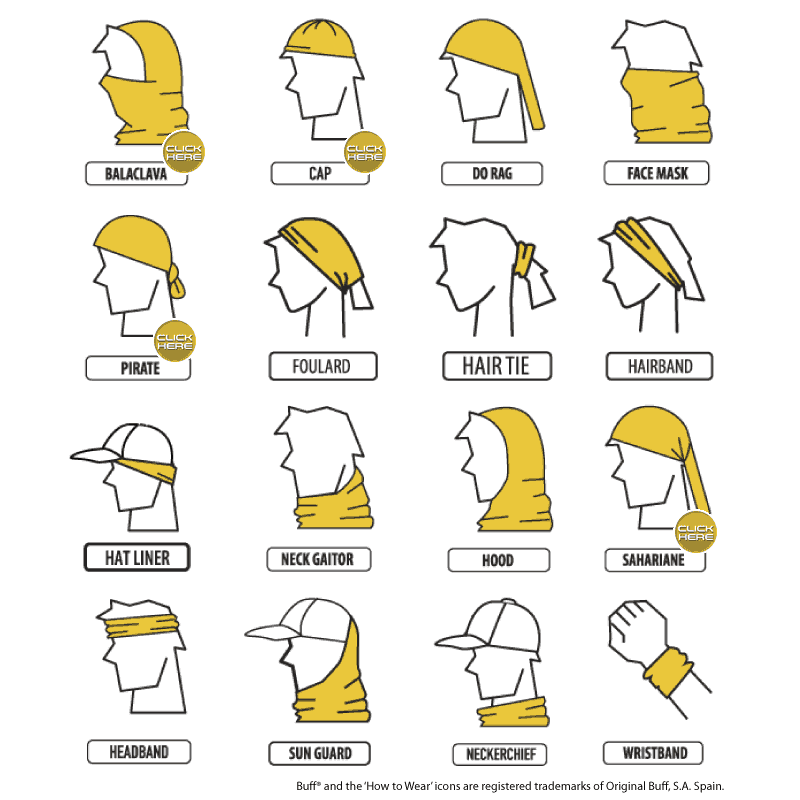
It occurred to me after re-reading my earlier parkrun post, which included a picture of me lumbering sweatily towards the finish of my first-ever parkrun in 2013, that I was wearing my Welsh dragon Buff on my head and that furthermore there were probably a whole raft of photos from various outdoor activities over the years which feature me wearing a variety of Buffs in various of the many possible configurations. Moreover, having got a couple of Buffs for Christmas and, honestly, probably having enough of them now I thought it might be a good moment for an audit. So: pictured below is my Buff collection.

A quick run-through:

  • The green bamboo-themed one at the top left is the OG, the first one I ever bought, from an outdoor shop in Keswick (possibly Rohan) in probably around 2008. Hazel bought one as well and we had an entertaining trip to a pub just up the road (possibly the Dog & Gun) immediately afterwards experimenting with the various wearing options, to the fascination of various locals.
  • The red, white and blue one at top right is technically not a "real" Buff as I'm pretty sure it was from the middle aisle of Aldi, and was therefore almost certainly cheaper. Where it wins over the original one is in being slightly bigger; the extra fabric real estate is very handy if you want to make it into things like the pirate bandana or the beanie hat (see the linked video above for instructions) and have (like me) a freakin' mahoosive cranium. 
  • The Welsh dragon one is probably the one I wear the most - you can see that I'm also wearing it in the Llanfoist Crossing parkrun photo in the previous post, for instance.
  • The blue one was slightly bizarrely (but awesomely) given away as a free gift when I ordered some cheap maps from Dash4It.
  • The one with the Norwegian flag on it was purchased in Oslo when we stopped there on the cruise we went on in July 2023.
  • The YesCymru one is a recent replacement for one I had previously (further investigation reveals it was Christmas 2020 - I'm wearing it in the post-COVID Riverfront parkrun pic in the previous post), lost for a lengthy period of time, found in a slightly musty state in my golf bag to much rejoicing and then promptly lost again almost immediately. Commendably they are only a fiver on their website, though, so I just bought another one.
  • The parkrun one was a Christmas present from this year, a sort of bonus item alongside the 50-parkrun commemorative T-shirt I also got.

A few bonus Buff-wearing pics, respectively these depict: the original green one, looking at a map with baby Nia halfway up Gray Hill; rocking a textbook pirate bandana cooking up some spicy noodles near the Ystradfellte waterfalls wearing the blue Aldi one; me (wearing the Welsh dragon one) and Hazel at the top of one of the Buttermere fells (either High Stile or High Crag); some heartwarming family shit featuring me wearing the YesCymru one (the old one, before the start of the lose/find/lose again cycle) and another parkrun one, this time of me wearing the Norwegian one while struggling to muster a sprint finish in (successful, as it happens) search of a PB at Riverfront. No pictures featuring the other two yet, though I expect I will wear the parkrun one to a parkrun at least once during 2026; seems only fair.


Sunday, October 26, 2025

sudeley, life has new meaning to me

Part two of the mappage catchuppage features a couple of lower-level walks, though not without summit-conquering of a sort, as you may have already seen if you looked at the photo gallery I linked to in the last post

Anyway, back in June a group of us decided to get together for a weekend away, as we didn't get to see each other very often for the usual middle-aged reasons: gradual geographical dispersion, kids to be fed and entertained, increasing physical decrepitude, male pattern baldness, piles, gout, etc. We hired an AirBnB in Winchcombe, Gloucestershire with the intention of doing some walking in the Cotswolds and a bit of eating and drinking and general hanging out, shooting the shit and all that. It fell to Steffen and myself to do most of the route-organising and I think we did a pretty decent job, coming up with a long walk on day 1 when we had all day and a slightly shorter one for day 2 when everyone wanted to be on the road back by mid-afternoon. 

Day 1 comprised a 20-kilometre clockwise circular walk starting and finishing at the house and encompassing the highest parts of the entire Costwold group of hills as well as a couple of other points of interest including the Bela's Knap long barrow. The high plateau of Cleeve Hill and Cleeve Common is a pleasant place to be, especially in the warm sunny weather we were fortunate enough to have. Another pleasant place to be is the Rising Sun in Cleeve Hill village where we stopped for a couple of refreshing pints (Otter ales, if I remember rightly) and some light lunch. 

The actual high point of the day, and indeed of the Costwolds as a whole, is the summit of Cleeve Hill at a fairly modest 330 metres (1080 feet). The actual summit is a fairly anonymous trig point a couple of hundred yards from a car park and a couple of radio masts (you can see it marked with a "330" at the bottom of the map below); the grander viewpoint with a single tree, some memorial plaques and benches, another trig point and a toposcope a kilometre or so to the north-west is more impressive, but a few metres lower. Crucially this is also the county high point of Gloucestershire, which enables me to tick that off on my list. Going purely by the county list linked in that magazine article, and not getting involved in an argument about the sense of listing long-defunct counties like Huntingdonshire and Merionethshire, my list currently comprises the following:

England

  • Berkshire
  • Cornwall
  • Cumberland
  • Derbyshire
  • Devon
  • Dorset
  • Gloucestershire
  • Herefordshire
  • Lancashire
  • Somerset
  • Westmorland

Wales

  • Brecknockshire
  • Caernarfonshire
  • Cardiganshire
  • Carmarthenshire
  • Monmouthshire
  • Pembrokeshire
Scotland

  • Aberdeenshire
  • Banffshire
  • Inverness-shire
  • Stirlingshire


In need of sustenance after the walk we had an evening in Winchcombe which included visits to the White Hart and Plaisterer's Arms and a curry afterwards. All very nice, as is the food in the White Hart where those of us who'd come down on the Friday night to wring maximum possible value out of the weekend had gone for dinner.

We had to check out of the house on Sunday morning, so we decided to start day 2's walk a mile or so down the road at Sudeley Castle, which fortunately has a nice big (and free) car park which you don't feel too guilty about making use of without actually visiting the buildings ("castle" is a bit of a stretch; it's a large country house). Sudeley is mainly famous for being the home of Catherine Parr, widow of Henry VIII; she moved there upon remarrying after Henry's death and is buried in the grounds. I must admit I was ignorant of what happened to her after Henry's death, in particular that she'd subsequently married Thomas Seymour, brother of Henry's third wife, Jane Seymour, and that for all the "divorced, beheaded, survived" stuff she only outlived Henry by about a year and a half, dying of complications from childbirth in September 1548 at the age of thirty-six.


I would describe this as a pleasant country ramble, memorable for being spent in excellent company and very pleasant weather rather than for anything exceptional about the details. The eleven or so kilometres (clockwise again; gently uphill for the first half, gently downhill for the second) got us back to the car park just after lunchtime and we eased our collective conscience about the car park situation by buying an ice cream from the cafe before heading off home. A few photos from the weekend can be found here.

the path of least resistance

Following on from the Blorenge and Scottish walks described in earlier posts, a few more maps I spotted in my collection from recent outings and which I thought might warrant a mention here. Firstly, Pen y Fan. Now you'll probably be aware that I've featured ascents of this particular mountain a few times before on this blog; I won't attempt to collate all of them but you might start herehere, here and here. But it is, let's not forget, the highest mountain in Southern Britain, a slightly woolly claim but one which essentially means that if you draw a horizontal line on a map of Britain a few feet south of the summit of Cadair Idris, as I've done below, the highest point in the region south of that line is indeed the summit of Pen y Fan. Yes, granted, you've defined your terms in such a way as to get the answer you want, but it's not an insignificant thing. 

Anyway, sometimes you want to find new and interesting ways to get up and down (and you almost always can), but sometimes you just want to smash up, bag it, smash down again, bish bosh, sorted. Other considerations are who else is coming along on the walk and how much gratuitous extra distance and effort they'll be prepared to tolerate without getting all whiny and annoying, and indeed who is in charge of route planning. I get a bit twitchy if this isn't me, but sometimes it isn't and you have to take an attitude of Zen-like acceptance in the face of whatever ill-thought-out bullshit other people come up with.

Examples, you say? Gladly. Here is the walk we did for my birthday back in February, a time of year when I get a free one-off opportunity to annoy everybody by making them do an activity of my choosing, which of course is going to be some tedious outdoorsy shit. So I'd proposed a trip up Pen Y Fan, which Nia had done a couple of times before but neither Alys nor Huwie had. I can't remember whether we'd done any advance planning for the Scotland trip at this stage but I might have had the thought of using it as a warm-up for the more strenuous mountain walking that would be involved there. My sister-in-law and brother-in-law and their two boys wanted to come as well, so I thought I'd better play it safe and just do one of the quick routes. So we parked up in the recently-expanded Pont ar Daf car park and did a circular route up via the path from Storey Arms and back down the main path which terminates at the car park, a round trip of a little over eight kilometres, or five miles if you prefer, in a clockwise direction on the map below.


What's very obviously apparent both from looking at the contours and the altitude chart a couple of kilometres in, and indeed from listening to the chorus of complaining from my fellow walkers, is that the forced loss and regain of around sixty metres in height in order to traverse the mini-valley containing the Blaen Taf-fawr stream is a bit of a motivation-killer early doors, just as it's a bit of an unwelcome sting in the tail at the end of a fifteen-mile bi-directional traverse of the main Beacons ridge.

Simple, you'll be saying, just use that prominently-marked green path that swings up to the north and, at the cost of maybe an extra half a kilometre across the ground, stays on the contours the whole way. And my answer to that is I'd love to, but it's not really discernible, still less signposted, any more. If you look at Google Maps' satellite view, really zoom in, and squint a bit you can just about convince yourself that there might be a scratch in the ground resembling a path, and if you drop the StreetView man right at the start of the path up from Storey Arms you might just about make out a grassy track ascending through a break in the heather on the left, but I have walked past here a few times, and past where the path supposedly rejoins the main path at the Tommy Jones obelisk, without noticing anything obvious. Next time I'm up there in reasonable weather with no pressing need to keep anyone else fed or entertained I'm going to have a look for it though.


Similarly, while the OS map shows a few alternative paths either side of the main route up from Pont ar Daf, none of those are discernible any longer at ground level. This will be largely because of the considerable path maintenance and landscaping effort that's gone on alongside the car park improvements to reduce the amount of erosion along these heavily-used routes. That does create a feedback loop, though, in that people will then be constrained, or at least heavily encouraged, to only using those routes for ascent rather than fanning out over a number of different routes to the same end-point, and perhaps reducing wear on any individual one. 

A couple of schools of thought on this one; Cameron McNeish, author of a couple of excellent books on Scottish mountain walking that I own, is a fervent advocate of people being, as he puts it, goats rather than sheep and making their own ways up, on the grounds that this reduces wear and tear and prevents a single furrow being worn into the ground that then needs repair and reinforcement. I'm quite sympathetic to this viewpoint, though the counter-example I would offer is Waun Fach in the Black Mountains, recent-ish recipient of exactly the sort of hard landscaping and path constraining that McNeish decries, but which I don't think anyone could rationally say is a worse place to be on top of now than before

My second ascent of Pen y Fan this year was as part of the I Am Pen y Fan charity challenge organised by SightLife, the charity my wife works for, and at the start of which we were seen off by charity patron Ceri Dupree, who didn't join us for the walk as the fabulous sequined Welsh flag dress he was wearing would have been rather constricting, not to mention a bit chilly on a wet and windy day. You will see from the summit photo that Huwie resolutely rocked a green sequined tailcoat the whole way to the top as a tribute, though. 


Route-wise this was as vanilla as it gets, just straight up and back from the car park, with a small loop on the way up for those who deemed it desirable and/or necessary (i.e. pretty much just me and the kids) to bag Corn Du. The summit photo I've reproduced above also features in this ongoing Twitter thread and in the recently-updated mega-gallery of trig points and mountain summits. 

Saturday, August 30, 2025

river deep, mountain high

More exciting outdoor-adventurousness news as promised, but first a bit of scene-setting: we went on holiday to Scotland at the end of July. It's a long old drive so we stopped off on the way to visit our friends John and Tracey at their home in Silverdale, just south of the Lake District. We were only there for a day or so but did get to do a bit of exploring, in particular the spectacular coastal location at the northern end of Morecambe Bay

Morecambe Bay is a vast expanse of estuarial sand and mudflats and fairly notorious for its shifting landscape and dangerous tides, and most famously (in recent times anyway) for the incident where over 20 Chinese cockle-harvesters drowned in 2004. Just to demonstrate the fickle nature of the landscape, there was until recently (properly recently as in a few weeks before we were there) a vast flat expanse of sand extending out from Silverdale Cove to the main channel of the River Kent as it emerged from its mouth a couple of miles to the north, but recent heavy rain had induced a sudden course change and the river had turned south, carved out a great gouge in the sand and created a substantial sand cliff only a couple of hundred yards from the beach, which Alys and Nia kindly posed by for scale and subsequently hilariously pretended to push their little brother off.

Despite the apparent foolhardiness of attempting such a thing, guided walks are periodically available, weather and tide conditions permitting, and a person with the grand title of the Queen's Guide To The Sands (well, presumably King's Guide these days) has the job of scoping out a safe route. As publicly-accessible walking routes go it's probably not as dangerous as the Broomway in Essex - less chance of being maimed by discarded military ordnance, for instance - but definitely not to be trifled with. It is at least still passable, though, unlike the Wadeway in Chichester Harbour where you would now disappear into a canal halfway across.

Anyway, we didn't do any of that, preferring to head home for a refreshing beer and a soak in the hot tub. The following day we headed off to continue our journey north to our destination of Hunter's Quay holiday village near Dunoon on the Cowal peninsula, which I see I mentioned here. I see that I laughingly make reference to there being no point building a bridge across from the mainland (the intervening channel being basically the confluence of Loch Long and the Firth of Clyde) as it wouldn't get much use. That may be true, but more pertinently it's a couple of miles across and would therefore be a fairly major feat of engineering, not to mention one spanning a major shipping lane. Whatever, there isn't one, and so once you've got as far as Gourock (which you do by basically heading north into Glasgow and then turning left) you are obliged to queue for a ferry. Anecdotally, and I'm not saying this justifies the cost of a bridge, the ferry terminals were pretty busy in both directions when we crossed, and by no means everyone got on the first one that showed up.

Anyway, the holiday village was perfectly nice, featuring the usual chalet-slash-static-caravan accommodation and the usual array of food and drink facilities plus some entertainment for the kids. I'm always unavoidably reminded of Hi-De-Hi in places like this but it was actually perfectly nice. More importantly a) Hazel had managed to wangle a super-cheap deal for a short break and b) a shortish drive north (no ferries required this time) takes you to the north end of Loch Lomond and the vicinity of the Arrochar Alps, some of Scotland's most southerly and therefore most easily accessible Munros. Technically the most southerly Munro is Ben Lomond, but from where we started it's rather awkwardly situated on the east side of the loch, and in any case I'd been up it before, back in about 1999.

So, emboldened by everyone's conquering of a rather wet and soggy Pen y Fan for my birthday in February I devised a walk (basically this one) that would bag two Munros and offer the possibility of a crack at The Cobbler, just short of Munro height but an interesting scrambly challenge. I had mentally earmarked that last bit as very unlikely to come off, but it's good for Plan A to be ambitious as long as there's a Plan B you can fall back on. 

There's a car park by the shores of Loch Long just outside the village of Succoth, which I expect you can make up your own jokes about - you know, Elizabeth I visiting and declaring "the mountain view enchanteth most delightfully, but the neighbouring village sucketh most egregiously", that sort of thing - anyway, point is it offers a good starting point for the walk. If you've been paying attention, though, you'll have clocked that Loch Long is a sea loch, and that therefore you are going to be obliged to gain all 3000+ of those Munro feet without a head start. Moreover, if you follow the anticlockwise route I'd devised, the usual route of ascent up Beinn Narnain, the first Munro, is a relentless direct upward slog along the remains of an old cable railway, of which only a few lumps of concrete footing remain. Once you get out of the woods the relentlessness eases off a bit and it's quite pleasant, though challenging. Eventually you arrive at a pretty intimidating wall of rock which you have to find a scrambly way up to get onto the summit plateau and bag the trig point. Beinn Narnain is 926 metres or 3038 feet and (depending which list you use) is around 257th of the 280-odd Munros on the current list.


It's not the Black Cuillin, but it is far from easy - considerably more challenging than a good few of my previous Munros, and I was and am inordinately proud of the kids for giving every impression of enjoying the whole thing and seeming engaged by the idea of coming back and doing some more in future. I should also add a word for Hazel who had sustained a badly bruised ankle in a comedy incident with a shot putt at school sports day a couple of weeks earlier but clearly didn't want to let the side down and struggled up anyway. That constraint did mean that we had to abandon the idea of bagging the day's intended second Munro, Beinn Ime, which was disappointing but which I was half-expecting before we'd even set out. 

The walk out down the valley which separates Beinn Narnain from The Cobbler is a delight, as it's a pretty good path alongside a pretty river and affords excellent views of the Cobbler's knobbly profile in particular. A bit of steep zig-zagging back through the woods and you're back at the car park. After a long and strenuous walk like that a pint is very much in order and I heartily commend to you the Village Inn in Arrochar which has excellent ale from the Fyne Ales brewery. Two things to say about Fyne Ales: firstly haha, you see what they did there, and secondly I'd had them before in a pub in Edinburgh in 2011.

Anyway, the important thing here is that this was the kids' first Munro, and the first time I'd had an opportunity to add one to my list since back before we had kids. We actually did three Scottish trips with our friends Jenny and Jim and on those trips bagged four, four and zero Munros respectively, so this was actually the first one I'd been up since 2010. My personal count now stands at fifteen. 

Route map and altitude profile are below: total distance is about twelve kilometres or seven-and-a-half miles.


Just to cap off the holiday activities, once we came to the end of our stay in Dunoon we headed back across to another quite similar holiday park just east of Edinburgh for a couple of days and spent some time doing the usual tourist-y stuff in Edinburgh including a trip down into Mary King's Close which was very interesting, and a walking tour of locations relating to JK Rowling (a former resident of Edinburgh) and the Harry Potter books. I would describe this as a commendably game attempt to get some tourist mileage out of some incredibly tenuous connections: once you've been to the site of the former cafe where she sat and wrote some of the early books you're reduced to pointing at various knobbly buildings and saying: hey, might this not have been partial inspiration for Hogwarts? Go on, squint a bit. Our tour guide was an engaging enough bloke, though, and it was pretty good fun. We didn't have time to climb Arthur's Seat but we did have time for me and Nia to have a crack at the Meadowmill parkrun on Saturday morning. Anyone fancying a bit of Scottish parkrun tourism should be aware that most if not all of the Scottish ones start at 9:30am rather than 9am. Not sure if this is a daylight thing or just a bit of bolshy being different for the sake of it.

Friday, August 29, 2025

back once again with the hill behaviour

We went for a walk up the Blorenge a couple of weeks ago; broadly similar in route and distance to the two previous walks we'd done - the slightly ill-fated (in terms of the health of my ankle and boots) lockdown one in 2021 and the one with some work colleagues all the way back in 2009. So we're not breaking any new ground here but as always there are some points of interest that are worth mentioning, and it serves as an intro to some other more significant walk stuff that we did earlier in the summer and which I'll get to in another post.

So, anyway, I don't want to rehash the content of earlier posts here but you'll recall that the Blorenge is a smallish mountain (or a largish hill, whatever you like, I'm not getting into an argument about categorisation) just outside Abergavenny, really just the steep end of the largest lobe of a sort of cloverleaf-shaped area of high ground centred just north of Blaenavon. Any walk that wants to qualify as an "ascent" in any meaningful way pretty much has to start somewhere in the vicinity of Llanfoist, and it just so happens that there's a car park at Llanfoist Crossing, at the start point of the cycle path that follows the old railway line from Llanfoist to Merthyr Tydfil along some of the bits that haven't been subsumed by the Heads Of The Valleys Road. The only drawback is that the car park is quite small and heavily used by dog walkers so it can be a bit of a bunfight finding a space. I'm not going to be That Guy and suggest you provide minor botheration to the locals by parking on a residential street as an alternative, but clearly that is a thing you could do if so inclined. 

Anyway, you're an adult, sort your own parking out. Having done that you walk up the path that goes under the old Monmouthshire and Brecon Canal and then smashes straight up the hill through the woods directly towards the summit of the Blorenge. On emerging into the open you can, if you so wish, carry on straight up, but a more scenic and less lung-busting option is to take a left turn and head for the pleasant spot of the Devil's Punchbowl, a small pond in what is presumably some sort of glacial cwm. It's apparently man-made, and surprisingly recent (circa 1960s) - it was previously just a low-lying marshy area. Apparently quite a popular wild swimming spot, although when we were there the water level was quite low and it all looked a bit green and murky.

After the brief respite of the fairly flat (even slightly downhill) walk to the Devil's Punchbowl and maybe a brief respite to take in the scenery and have a drink and a KitKat (other chocolate bars are available) you turn south-west and start uphill again, briefly meeting a minor road before turning north for the proper assault on the hill. You'll notice that the path takes a slightly indirect hook-y route before approaching the summit trig point from the north-east and you might be tempted to say: hell, I'm going to cut that corner off. To that I would say: go for it if you want, but I have done it (partly by accident) and generally found it to be a bit of an arse. I mean, you won't die, but the energy and irritation expended in pathless floundering about probably means taking the main path is a better option. You do you, though.

The summit trig point is by a big pile of rocks (which obscure it until the last second coming from the north-east) and, having bagged it and dropped off the top (we went south as this happened to be the direction that got us out of the wind) for a pork pie and a Granny Smith, the walk then drops off the summit ridge to the north-west and eventually joins up with the route of Hill's Tramroad, which includes an exciting tunnel which the kids had some fun exploring and where they shot a video for Huwie's YouTube channel. That path follows the contours round the hillside until it links back with the path up through the woods which takes you back down to where you started.

I think this is the best of the three slightly different routes: the 2009 walk included an extension to loop round the Foxhunter car park and Keeper's Pond (another popular wild swimming spot), which is all very nice but doesn't really add much apart from some lateral distance, and I think the ascent via the Devil's Punchbowl is better than the route along the canal towpath and then an uphill slog along some roads. The 2021 walk took a similar route up (with a bit of inadvertent pathless floundering as described above) but then a much more direct route down, which is fine if you're in a hurry but less interesting than the route incorporating the tramroad and tunnel.

Overall route distance was just over ten kilometres, or about six-and-a-half miles. Details below: latest in the long and varied series of altitude-graph-generating tools is Strava which my Garmin running watch is linked to: this seems not to have the random starting height discrepancy that the old phone app had, which is nice. 


Friday, June 06, 2025

we'll tear your sole apart

Time for a deep dive into the world of shoes; my shoes in particular. I have no authority to speak for or about anyone else's shoes, nor would I be so presumptuous as to seek to do so. But I am conscious that I have in the past marked the passing of certain items of footwear, in particular shoes dedicated to the specific pursuits of running and walking, and by walking I suppose I sort of mean mountain hiking, rather than just going down the shops; you can pretty much wear any shoes for that, after all.

So I see that I commemorated the passing of my old Saucony running shoes in favour of a fairly cheapo pair of Crane-branded ones from Aldi; at some point after that I upgraded those to a pair of blue Nikes for running purposes, probably around the time I decided to have another crack at getting into doing parkruns in 2018. Those did me for a while but earlier this year I decided it was time to invest in another pair. Now at some point between about 2018 and 2025 there's been a revolution in the world of running shoes whereby every pair you can buy now has these absurdly thick bouncy soles. This has caused some controversy among elite athletes who could suddenly complete entire marathons in a single bound and some restrictions have had to be applied. The pair of Asics shoes I eventually bought are by no means the most extreme example but, as you can see from the photo, are much thicker than the old wafer-thin Nikes, though of course these have had to endure the best part of a decade of being pounded flat by my gargantuan weight. I should add that the new ones are also absurdly comfortable and forgiving of my elephantine running style and certainly reduce the impact of my clumsy lumberings so that I can now hear my music over the deafening thwacking of my feet on the pavement. As a data point I haven't broken the world marathon record or anything while wearing them but I have recently slightly lowered my long-standing parkrun PB. More tedious parkrun evangelism and nerdy stattery in a later post.


You might also recall the progression of my walking shoes from the old Salomons, which bit the dust after a soggy visit to Pembrokeshire in 2010, through the brown Tevas (which are probably still my favourite pair of walking shoes of all the various ones I have ever owned), to the blue Karrimor pair I bought in late 2016. That pair were first-choice walking shoes for only a relatively short space of time as they weren't all that good and were replaced by a pair of grey Mammut shoes I got in Go Outdoors in what was probably around 2018. I can narrow the date down in this way because while I'm still in the Karrimors in this photo at the top of Pen y Fan in June 2018, I'm in the Mammuts in the following photo of me atop Striding Edge in the Lake District in April 2019.


But eventually the Mammuts too became a victim of their own success, by which I mean they were so comfortable they ended up getting worn all the time, and needed replacing, which they have now been by this splendid pair of North Ridge shoes, also purchased from the excellent people at Go Outdoors only a few days ago. You will notice, though, that the super-thick and bouncy soles thing has now extended to walking shoes as well. 


Note also that I still possess both the blue Karrimors, which are very much relegated to mowing the lawn and other gardening activities these days, and my pair of grey Tevas which I bought as a backup for the brown pair, never liked or wore quite as much, and which a couple of decades later the soles are starting to fall off. What will happen now is that the Mammuts will be relegated to general odd-job shoes and the Karrimors and Tevas will be relegated to, erm, the bin. The ciiiiircle of liiiife, etc. 


Monday, September 02, 2024

thomas' hill figures

A couple of further thoughts prompted by having a look through my new (well, new to me, anyway) copy of the Morris Marples book. Firstly, a bit of orientation for those new to the whole chalk hill-figure business: basically the only one of these with any claim to proper antiquity is the White Horse of Uffington, well-established as being at least late Bronze Age or early Iron Age and therefore most likely around 3000 years old. Almost all of the others were created in a spree of enthusiasm for the form lasting about 100 years from mid-18th to mid-19th century. The two giants at Cerne Abbas and Wilmington may have some claim to be older than that, and things like the Whiteleaf Cross and the Watlington White Mark may be Christian sanitisings of earlier pagan symbols (translation: GIANT COCKS) but it's all highly speculative and frankly not particularly convincing. Marples, to his credit, comes to much the same conclusion.

As I said in the previous post, I've visited the Uffington horse a few times, anything up to half-a-dozen or so I would guess. I recall also visiting the Cerne Abbas giant (including its GIANT COCK) during a family holiday when I was a teenager. The only other white horses I recall having actually seen are the Westbury one (which can be seen from the train) and the Cherhill one, which is visible from the A4 and which we stopped at at least once while I was being delivered from Newbury back to Bristol for the start of a university term. We also used to go to a pub on the outskirts of Chippenham (a few miles up the road) for lunch which was called The Lysley Arms at the time and which I see is now called The Pewsham. The food was very nice when we used to go there and looks pretty good now, though I will point out that - now I think about it - I haven't been there for over thirty years. I mean, Christ.

The only other one I think I've seen in the flesh, or in the chalk, if you will, is the Osmington horse which I have this picture of me in the vicinity of looking slightly fat and hungover (though still with a reasonably impressive head of hair) in January 2016. 

Osmington is also, you'll recall, the birthplace of cheese racing, the actual location being the campsite at Osmington Mills a couple of miles down the road from the horse.

Anyway, for no particular reason other than that it amused me to do it, here's the horses in their current form courtesy of Google Maps' aerial photography. 


Don't strain your eyes squinting for the last one, as it's not discernibly there any more (it would have been in the green strip at the bottom of the photo). It is listed in the Marples book as Woolborough but all present-day mapping lists the location as Woolbury. The horse, a small and pretty rough affair made out of flints embedded in the turf, was supposedly still there in the late 1990s after being rediscovered and tidied up a bit but now seems to have subsided beneath the vegetation again.

Wednesday, August 28, 2024

talking at cross purposes

A few things of note from our camping trip to Buckinghamshire last week. Firstly, yes, all right, I am forced to concede that Buckinghamshire clearly does actually exist, despite my suggestions here that it doesn't. Secondly, we stayed at Home Farm, near Radnage, about five miles north-west of High Wycombe. 

You might ask at this point: of all the marvellous places to go in this glorious country, why would you go camping in the vicinity of High Wycombe, with all due respect to the fine people who live there? Well, mainly because it is roughly equidistant between where we live and where our friends live up near Melton Mowbray in Leicestershire. Wait a minute there, you'll be saying, a straight line between South Wales and Leicestershire doesn't go through the Chilterns, you crazy mofo. Well, yes, you're right, halfway on a direct line would put us somewhere in the vicinity of Bromsgrove. But - and no disrespect intended to Bromsgrove - who wants to go on holiday in Bromsgrove? I mean, apart from those with an overriding historical interest in the nail-making industry, of course. So we pulled the line south-east a bit and ended up in the Chilterns, a place I know very slightly, mainly because I know a few people who grew up there, rather than because I've been there many times.

One of the things I do know about the Chilterns, and was reminded of on looking at some maps of the area surrounding Radnage, is that there are a few chalk hill figures in the vicinity, most notably the Whiteleaf Cross in the vicinity of Princes Risborough and the Watlington White Mark near, erm, Watlington. I know these things because I grew up in (among many other places) Newbury and went a few times to see the White Horse of Uffington, about 20 miles away to the north-west, often combined with a look at the nearby Uffington Castle hillfort and maybe even a stroll of a mile or so along the Ridgeway to Wayland's Smithy. Hang on, you'll be saying, that's away from the Chilterns, and moreover, away from, I'd venture to suggest, the point. Well, the point, if you'll allow me, is that my parents had a book called White Horses And Other Hill Figures by a chap called Morris Marples which had a very interesting chapter in it about the Uffington horse, but also many other chapters describing other horses, the vast majority of them concentrated into a fairly small area in Wiltshire. It's not just horses, either - there are a couple of giant human figures at Wilmington and Cerne Abbas, and various other things of different shapes and sizes including the figures at Whiteleaf and Watlington as mentioned above, and another which we'll come to in a minute.

Anyway, my parents seem to have lost or got rid of their copy of the Marples book - which was first published in 1949 but was still in print into the 1980s - but fortunately the internet exists and I was able to get hold of quite a handy second-hand copy from the excellent people at World of Books for a very reasonable six quid. The reason I did this, just to finally get to the point after several paragraphs of discursive waffle, is that I'd spotted the village of Bledlow very close to Radnage and had remembered that there was another cross listed in the Marples book on a nearby hill, generally known as the Bledlow Cross.

If you look at a present-day OS map of the area you'll see that the Bledlow Cross is still marked. The map on the right here is the current one; the one on the left is earlier (1960s at the latest) and has an actual cross marked in roughly the right orientation. 

I was going to go on to say: good luck finding it via Google Maps' aerial photography, though, because there's absolutely fuck all evidence of it and it's all just trees. I would have said this despite my knowledge of some clearing work having been done in the last couple of years (more on this later), having examined the aerial views before we went on holiday (I mean, I am not an idiot). Having just this minute looked again, though, I can see a clearing and a faint cross. It's not exactly clear (the green-on-green colour scheme doesn't help) but it's definitely there. I can only assume the satellite imagery has been updated at some point in the last few weeks. 

Anyway, intrigued by its apparent disappearance I put "Bledlow Cross" into YouTube to see if I could find anything and came across this rather splendid video of these two tweedy chaps going on a quest to find it. They do mention that some clearance work (presumably including felling some trees) was done as recently as February 2024 and when they eventually find the cross it is reasonably free of vegetation, though not particularly white. 

Time for a photo gallery before we get to the bit where we go on an actual quest to find it ourselves. Here's a picture from probably the first couple of decades of the 20th century showing the cross on a tree-free hillside, a photo from the Marples book which is probably from the 1940s, a photo from Mark Hows' splendid website which I would guess is maybe 1980s, a still from the video mentioned above and a drone shot resulting from the scouting expedition described here


So, anyway, the upshot of all this is that I persuaded all nine people in our party that we should go for a walk in the general area, including a couple of sections of the Ridgeway and the Icknield Way and a bit of geocaching, but also incorporating a quick bit of off-path scrambling about to see if we could find the cross. The couple of rope swings (one of which features in the video) were very handy here both as a navigational aid and also a distraction for those less inclined than the hardcore adventurers (me, Jim and Nia) to plough through brambles and nettles to get to what's basically a couple of medium-sized ditches. 

Anyway, the update I can give you from August 9th 2024, which is the date we visited, is that a substantial amount of regrowth has happened since the clearance work and the initial rush of YouTubers visiting to make videos. It's only grass and general weeds but it does substantially obscure the cross, and if the people involved don't want their excellent work to be in vain then a more regular programme of clearance looks like it'll be essential. Here's a few photos - Jim at the cross's lower extremity, a view looking up to the top of the cross and Nia at the cross's rough midpoint with its eastern side-arm behind her.


The map below shows the (anticlockwise) route of the walk; almost exactly six kilometres in total, although that includes some aimless thrashing about trying to find the cross and later a couple of seemingly non-existent geocaches. If you just did the walk like a sensible human being it's probably not much more than five. 


A quick footnote: the other major site of interest we visited was the Hellfire Caves in West Wycombe, which are well worth a look, and whose creator (he didn't do the actual digging, he got some plebs in to do that) Sir Francis Dashwood seems to have been a hell of a guy. We also did the walk up the hill to see his mausoleum and the church which he had a giant golden ball built on top of just so he and his mates could sit in it drinking port and chewing the fat.

We also did a bit of parkrun tourism at Wycombe Rye on Saturday and had an unexpected celebrity encounter with Vernon Kay, though we disappointingly didn't manage to sneak into any of the photographs (I think we're somewhere behind his head in the first one). We then went to the lido at the start/finish line afterwards for a dip. Swimming pools in general aren't really my thing, let alone outdoor ones on a slightly overcast day, and I haven't been in an outdoor pool in Britain since occasional visits to the one at the Northcroft Centre in Newbury as a child. That one seems to have had a substantial spruce-up and refurbishment lately; it's safe to say the Wycombe Rye one has not and could perhaps do with one. 

So, did we have a nice week? Yes we did. Am I going to prioritise a return trip for another holiday? Eh, probably not, although I am going to keep an eye on further developments with the Bledlow Cross to see if anything exciting happens. If it disappears beneath a sea of grass and bracken again then I'm going to be a bit - no, wait for it - cross.