Friday, April 29, 2016

funk off and die

As I said at the time of the deaths of David Bowie and Glenn Frey earlier in 2016 (a year which statistically is exceptionally celebrity-death-heavy so far, so it's OK for you to say that), which celebrity's death you feel personally affected by will reflect your past life, upbringing and what sort of cultural stuff you were exposed to or chose to expose yourself to.

So, anyway, what I'm building up to is that Prince's death this week is a much more significant event to me than either of the other two, largely because Prince formed a part of my formative music listening habits in a way that Bowie and the Eagles didn't.

I don't know what's a typical age to start buying records (this of course was back in the days when vinyl "records" were the primary medium of music delivery), but I suspect 13 is probably a bit later than most. I think I may technically have "bought" this John Denver album in Korea back when I was about six, in that I was invited to make the final decision and it was paid for with money that was nominally "mine", but I deem my first "proper" single purchase to be Every Breath You Take by The Police in 1983, swiftly followed by I Guess That's Why They Call It The Blues by Elton John and Gimme All Your Lovin' by ZZ Top. All good songs, and choices which I stand by 30-odd years later, but all very white, very male - very gay in Elton's case, as it happens, but he wasn't quite as up-front about it at the time.

So when Prince really became a big thing in the UK around the time of When Doves Cry there was a fair bit of paradigm-smashing going on - black guy, not really conforming to traditional notions of masculinity but still clearly beating off the ladies with a shitty stick in his offstage life, making music with a funky dance-y edge while still being a brilliant rock guitarist, all that sort of thing.

It's interesting to consider how one's musical tastes evolve - everyone likes to think that they just like what they like, as the end result of a completely objective process of listening to stuff and working out what's good and what isn't, but of course this is nonsense, and every single choice you make is influenced to some extent by prior experiences, who you knew, what they liked, where you first heard things and stuff like that. In the case of Prince, my recollection is that my friend Tom had a copy of the 7" single of Let's Go Crazy, and its organ-backed spoken intro, lyrics suggesting transgressive sexy sexy times and squealy rock guitar finale all seemed pungently exotic and exciting to me at the time. But I should apply a bit of self-awareness and add that Tom was a lot cooler than me, so maybe there was an inclination to give this more of a favourable first listen just because it was him who'd introduced me to it? Who knows. In my defence he was also into The Cult in a big way and (She Sells Sanctuary, which is a cracking tune, aside) I always thought they were a bit shit. I suppose the key thing to say is that this marked a move away from being musically influenced by my parents' record collection to being musically influenced by my contemporaries, sometimes moving into the realms of stuff my parents wouldn't necessarily "get".

So I went and bought the Purple Rain album and played it to death for a year or so, with further transgressive thrills provided by Darling Nikki with its references to female masturbation, something my 14/15-year-old self may very possibly not have even been previously aware was a thing. I had copies of the next two albums, Around The World In A Day and Parade, through the magic of home taping (which turned out not to be killing music after all) before buying the double album Sign O'The Times in 1987. We parted company a bit after that, and I don't think I've purchased a non-compilation Prince album since, but there was, in hindsight, lots of good stuff after that, just spread a bit more thinly. Sign O'The Times is the one if you must have only one; if you also had Purple Rain and a comprehensive singles compilation (this one, for instance, which is the one I have, although it only includes stuff up to 1993) that would be a pretty good start.

So here's my favourite ten Prince songs, in no particular order, and written down largely off the cuff, so no guarantee of completeness or definitiveness, nor indeed originality, since a lot of these are the big hits. If you want to know what other people, doubtless more knowledgeable about the unexplored nooks and crannies of his vast back catalogue, think, plenty of other opinions are available.
  • I Could Never Take The Place Of Your Man - I think this may be my favourite Prince song of all, just because it's such a joyous summery tune, and in its 6½-minute album version gives Prince the chance for a bit of a rock guitar workout, something he usually kept on a tight rein on the albums. Its lyrical theme of man rejecting a woman's offer of a one-night stand because he knows she won't feel good about it afterwards typifies Prince's generally groovy and empowering attitudes to women and female sexuality, not something you could say about many mid-1980s male artists.
  • Little Red Corvette - cars as metaphor for sex, horse-riding as metaphor for sex. It's about sex, basically.
  • Sign O'The Times - atypical in that it's got a socio-political edge to it, but typical in that it typifies Prince's gift for minimal backing arrangements (Kiss being the classic example of this). Also one of the small group of songs to lyrically reference the Challenger shuttle disaster.
  • Dirty Mind - well this is just pure filth, with the pulsing synth groove humping your leg like a randy Yorkshire terrier.
  • Alphabet St. - a bit of jangly funk guitar, a bit more lyrical depiction of non-vanilla sexy sexy times ("I would like to.....watch").
  • Pope - a track from the 1993 Hits compilation, this previously unreleased song is a pretty silly throwaway tune that was obviously just Prince mucking about in the studio, but is still sharp, funny and ferociously funky.
  • Cream - well, again, it's just (just!) about sex, but it's an irresistible sinuous groove that owes more than a little to Get It On by T.Rex.
  • Sexy MF - extreme funkiness, liberal use of the word "motherfucker" and some bowel-loosening parpy horn stabs.
  • Purple Rain - yeah, I know, but think of it as a sort of mid-1980s Hey Jude; similar tempo, lengthy coda and all. And it's another one from the more rock-guitar-oriented end of his range, which fits my personal prejudices.
  • Raspberry Beret - another glorious summer tune; boy meets funky scantily-clad hipster girl in the corner shop and they head off to a deserted barn on his motorbike to go at it like knives. The Hindu Love Gods' brutish meat-and-potatoes cover version is worth a listen too.
Of course this neglects all the great songs that he wrote for or had covered by other people as well, from I Feel For You to Manic Monday to Nothing Compares 2 U.

Tuesday, April 19, 2016

the last book I read

Ragtime by EL Doctorow.

It's New York City (and its environs) in the first decade-and-a-half of the 20th century - so if there were ever a time and place where it could be said that Great Things Are Afoot, this would be it. The invention of the motor car, the skyscraper, the movies, all fuelled by a relentless influx of immigrants from all over the world; mainly Europe but plenty of more exotic places as well.

And the people: Henry Ford, JP Morgan, Harry Houdini, Sigmund Freud, Carl Jung, Emma Goldman - all in or around New York at this time doing their various things for the advancement of humanity.

Amid all this momentous stuff there are some actual people living their lives as well. For the purposes of the novel these are: a WASP family living in New Rochelle, just outside the city, an Eastern European immigrant and his young daughter, and a black musician and his fiancée. The WASP family are known, slightly impersonally, as Father, Mother, Mother's Younger Brother and "the boy". Father goes off on expeditions, including Peary's 1909 North Pole expedition, while Mother's Younger Brother moons around fairly aimlessly in that way young men do until he becomes obsessed with socialite Evelyn Nesbit and the media circus surrounding her and her husband Harry Thaw. Having met Evelyn through the radical Emma Goldman and conducted a brief affair with her, Mother's Younger Brother finds himself open to radical ideas.

As it happens Coalhouse Walker has a radical idea for him - having been victimised by some of the New York fire department and had his car (a Ford Model T) confiscated, Coalhouse embarks on a campaign of terror against the city with an expanding band of sidekicks to get compensation. Coalhouse also has a fiancée, Sarah, and a child, who ends up living with Mother and Father after Sarah dies. Coalhouse ropes Mother's Younger Brother (who has an aptitude for explosives) into his cause, but things inevitably end in tears, and, in Coalhouse's case, a bullet-ridden death at the hands of the New York police. Meanwhile some of the carefree living will have to stop, as World War I is on the verge of breaking out.

I suppose you'd classify Ragtime at least partly as "historical fiction" in that it takes a real, well-documented period of time and some real, well-documented historical figures and weaves a fictional narrative around them. It mucks around with the rules slightly by having some of the "real" people do things they probably didn't actually do, like the rather fanciful whimsical interlude of Freud and Jung riding on the Tunnel of Love at Coney Island. As always there are some shades of grey here - I'm not sure you'd class, for instance, Turbulence as "historical fiction" despite its featuring some real-life events.

The trick with this sort of thing is to ensure that the transitions between real-life stuff which is documented in the history books and the stuff you've made up just to drive the story along aren't too lumpy and jarring. The only place where this doesn't seem seamless is in the character of Coalhouse Walker, his transition into urban terrorist, and his co-opting of Mother's Younger Brother into his band of outlaws. Interestingly this bit of the novel was apparently adapted (or stolen, depending how happy you are with the amount of attribution Doctorow gave for doing it) from an earlier (19th century) novel called Michael Kohlhaas by German author Heinrich von Kleist, itself apparently based on the real-life (16th century) story of Hans Kohlhase and his doomed attempt to get some redress for the mistreatment of his horses.

The distancing device whereby few of the (fictional) central characters have names is a slightly odd one - it doesn't divorce you from caring about individuals in the same way as Last And First Men does, but it does keep you at arm's length in terms of engaging with what happens to them. It also just reinforces the point that the book's main concern is the Great Sweep Of History, rather than the little people who populate it, and if some of the individuals get a bit lost, well, so be it. There might therefore be a sense in which you find it difficult to engage with any of the major characters - apart from the bit where Mother's Younger Brother falls out of a wardrobe while having a furtive wank in Evelyn Nesbit's hotel room. Well, we've all done it.

As with Under The Volcano, this is a dead cert for just about any list of "great 20th-century novels", and sure enough it pops up in the TIME magazine list of 100 greatest 20th-century novels. It was also made into a film in 1981 which featured James Cagney in his last appearance.

Here's Doctorow's appearance in the Paris Review's Art of Fiction series of long meandering interviews.

Sunday, April 17, 2016

deadlift, snatch or clean and jerk

Here's a curious coincidence: no sooner do I speculate on the relative merits of furious spin-bike training and furious self-abuse than the Daily Mail knock out a lifestyle piece along pretty much the same lines. Compare the respective dates: my blog post appeared on April 13th, the Mail article on April 15th. It's almost as if someone at the Mail, maybe even Paul Dacre himself, is reading this blog for inspiration.


The Mail article plays down the likely calorie-burning benefits of masturbation as compared to something like going for a jog or to the gym. On the other hand with some of those there may be a cost involved, and you have to do tedious administrative things like put some trousers on. Swings and roundabouts, as always.

Wednesday, April 13, 2016

I've got a bike you can ride it if you like

It's time to address the sensitive subject of my weight. No, no, don't try to fob me off with all that "weight? are you mad?", "you look fine", "you are like a LITERAL Greek god, you magnificent creature" stuff, we've got to grasp the nettle and face up to it.

Now as utterly delightful and rewarding as parenthood is, and I wouldn't have missed a moment of it, it is true that it does place some constraints on one's leisure time, and that means a reduction in the number of opportunities for getting some healthy exercise, whether that be golf, some sort of after-work racket sports action or just yomping up a hill. Even popping out to the shed for a quick thrash round my home gym is more difficult than it used to be, since it now has to happen between the end of the kids' bath-and-bed routine and dinner time, with the added complication that since cooking dinner is usually my job that also means pushing dinner-time back by half an hour or so.

So I decided something had to be done. I should clarify, I suppose, that this was brought about by a general feeling of not being quite as fit as I used to be, rather than by any sort of crash weight gain necessitating waddling round the house in a muumuu and occasionally losing the TV remote in my neck folds. In fact I weigh almost exactly the same now as I did at the end of 2005 when Hazel and I met. To be fair, that's a good four stone heavier than I was at some points during my university days, but I was painfully skinny back then thanks to only intermittently being able to afford to eat.

Back in the heady days of not having children, Hazel and I had got into a routine of going to an early-morning (7am!) spinning class at the grandly-named Newport International Sports Village, which I used to enjoy greatly despite the earliness of the hour, as you can get a really good sweat up while remaining in the same place. Now you might say, well, just get on an actual bike and go for a bike ride then, but that's actually considerably more complicated as you have to factor in the possibility of adverse weather and mechanical failures, not to mention being sideswiped by a juggernaut and killed. Not insurmountable problems (apart from the being killed bit), but the key here, as with all dieting and exercise regimes, is to realise that Future You is a shiftless feckless lazy fat bastard who will seize the slightest opportunity to weasel out of doing things that involve effort, and that therefore you need to pre-emptively put some structure in place that will thwart Future You from fucking up all your fine intentions. One could also say: I'm a busy man, it's the 21st century and I just want to get to the calorie-burning bit without all the admin, just as I relish being able to switch between songs at a click on iTunes without having to get up and put a different LP on the turntable. Progress, innit.

So I mentioned the possibility to Hazel of purchasing a spin bike for the house, presumably second-hand as a gym-quality one with a proper heavy flywheel typically goes for several hundred quid. Luckily she is a bit of a whiz at eBay and managed to get hold of a very solid Horizon S3+ at a bargain price (I don't know exactly how much as it was a Christmas present). I had to do some engineering work on it to repair the resistance adjusting knob which had a vexing habit of falling off halfway through a workout, but apart from that it was in perfect working order.


The other advantage of going to a spinning class rather than out on the road is that there's an instructor barking orders at you and imposing some structure on the session. Again, you can adhere to some sort of purist view that says: this should not be necessary with a bit of discipline, or you can shrug and say, yeah, but Future You will be on the ale and pies like a shot unless you keep an eye on him, the lazy fucker. At this point you can either hire a personal trainer at exorbitant cost, or you can search out some of the excellent selection of videos available on YouTube, mostly via Global Cycling Network, which seek to give the authentic spin class experience.

The second of our downstairs rooms (I believe "reception rooms" is the accepted estate-agent-ese) is set up as Hazel's photography client meeting room, and therefore, as luck would have it, contains a projector for facilitating viewing of wedding album designs, portraits, etc. So if I hook up my laptop to the projector and fire up a GCN YouTube video, hey presto, a real spinning class in my own home.

This one here is the one I normally use, since it's a good brisk 20-minute interval-training workout (i.e. periods of normal pedalling interspersed with sprints) which, if you commit to it fully, should give you that authentic sweat-dripping-on-the-floor effect by the end. Really this just provides a structure; the intensity level is up to you. As a general rule of thumb I like to try to keep to about 75rpm for the regular sections and crank it up to about 100rpm for the sprints - obviously how high you wind up the resistance is a factor too.


You may, if you wish, speculate about the possible other reasons why I use this particular video, like for instance its all-female class and the woman nearest the camera on the far right with the spectacular breasts in particular. I wouldn't like to comment, but the ladies do appear to be wearing a bit more make-up than would be normal for a spin class (in my experience at least, though of course I may just have chosen the wrong spin class to attend) and some of the sweat in the latter stages does look a bit artfully sprayed-on, particularly in the gratuitous bum-angle shots. But, you know, whatever keeps you interested and gets you through the 20 minutes. Some of the on-screen captioning is a bit (presumably knowingly) fnarr-fnarr as well.

All of which begs the question, and I'm sure you're way ahead of me here: how does the calorie-burning effect of a 20-minute spin bike workout compare with simply using the same video to facilitate masturbating furiously for 20 minutes?

There are various resources regarding the calorie-burning properties of stationary cycling, most of which suggest that a 20-minute workout at reasonable intensity will burn about 200 calories. Information, let alone reliable information, regarding wanking is a bit harder to come by (ooer), but most estimates seem to suggest a 20-minute workout of this kind will burn somewhere between 20 and 100 calories; this may vary depending how closely you adhere to the relax-SPRINT-relax-SPRINT pattern, and of course whether you can hold out for the full 20 minutes. Other considerations include whether you'd prefer to end up with muscular thighs or a massive right arm. So you might decide that it's worth splashing out (ooer, again) on a bike after all.

Tuesday, April 05, 2016

sithlebrity lookeylikey of the day

It was Nia's birthday today, so we went to Bristol Zoo for a day out. All good fun and Nia had a fine time including getting her face painted. She chose a ladybird design, which made for an arresting effect which I found faintly sinister for reasons I couldn't quite put my finger on, until I realised that it was because it made her look a bit like Darth Maul from Star Wars I: The Phantom Menace.


Fortunately we managed to get out and back on the Park & Ride bus without her getting sliced in half by any passing Jedi knights, which was nice. Those of you with long memories will recall that this is Nia's second appearance in this list.

Saturday, April 02, 2016

headlines of the day

The day in question being yesterday, actually, but I'm a busy man and I can't always leap into blogging action at the drop of a dangling modifier. Anyway, here's a couple from the Daily Mail.

Firstly, this one illustrating the importance of keeping track of which pronoun refers to whom - in the normal course of sentence construction the "she" and the "her" in the last clause would typically refer to the same person. Not so here, unless there's some sort of My Big Fat Scottish Zombie Wedding thing going on.


Secondly, this mind-bogglingly inconsequential piece about Victoria Beckham taking a selfie: the hack who wrote the original headline evidently gave it the care and attention its importance merited and left in two obvious errors (they seem to have now been corrected). The first one just mangles the (already lame) attempted reference to Bend It Like Beckham; the second just raises the question: what the hell is a "ballot pose"? Is it like a ballot box? i.e. something shiny, angular and sharp-cornered with a generous slot in the middle accessible by right to anyone who's on the electoral register? Well, as they say, good luck with that.


Obviously I do know it's meant to say "ballet", really. It's still not quite as funny as the claim about Stella Artois 4 being "a good pallet cleanser", though. Fascinatingly, although the link in that old 2009 blog post is now dead, the Wayback Machine has a couple of archives of it, one roughly contemporary with the post and one from a couple of years later. Here they are, in chronological order.


The sharp-eyed among you will notice that they've had a go at correcting the original error, but have, amusingly, still managed to cock it up, unless there really has been a refinement of the recipe to reposition the product from being suitable for cleaning heavy-duty wooden stacking platforms to being more suitable for cleaning artists' equipment. I assume not, and that the word they were groping unsuccessfully for each time was "palate". But it's Stella, so you never know.

Thursday, March 17, 2016

penguin popular 20th-century modern classics presents

A couple of follow-up thoughts after the last book review, mostly relating to my battered old Penguin paperback copy of Under The Volcano which I more than likely picked up on one of my strictly-rationed trips to Hay-on-Wye a few years back.

Firstly, it's always interesting to have a snoop into the endpapers of second-hand books to see if there are any inadvertent revelations about the previous owner(s). In this case there is an official-looking stamp inside the front cover which looks like this:


It turns out that Barnoldswick is in Lancashire, and that Barnoldswick County Secondary School still sort of exists, although it goes by a different name these days. Just for a second there I read the new name as Wes Craven High School, which would literally have been the best thing ever, but sadly the reality is a little more mundane.

Barnoldswick is apparently pronounced Barlick by locals, in one of those insider/outsider shibboleths that you'll find endearing or infuriating depending on your point of view (personally I tend towards the latter). More endearing, to me at least, are the claims to fame listed on its Wikipedia page, two of which make a strong claim for Lamest Thing Ever, as follows:
  • Barnoldswick, at 12 letters, is one of the longest place names in the UK with no repeated letters. Only Buckfastleigh in Devon and two places called Buslingthorpe (one in Yorkshire, one in Lincolnshire) are longer at 13 letters.
  • It is said, by some, possibly people who ought to get out more, that Barnoldswick is the biggest town in the UK not to be directly served by any A-roads. 
I really want to go and visit now, even if it has to be via an unsatisfyingly slow B-road route. Barnoldswick also sounds a bit like Barnstoneworth, home of the world's worst football team.

My copy of Under The Volcano, which appears to be from around 1963, is from an early series of Penguin Modern Classics. I've got a few books from a few different incarnations of this series over the years, plus a few from other Penguin series whose scope, you'd think, must overlap somewhere. Here's a photo (open it in a new tab for a full-size version):


So The Trial is a Penguin Modern Classic from probably the late 1980s, and The Queen's Gambit is probably no more than a couple of years old. As for the others, A Room With A View is from the old black-spined Penguin Classics series, and Things Fall Apart is from the newer version of the series which have mostly silver covers. Now since A Room With A View was published in 1908 and Things Fall Apart in 1958 (conversely, Under The Volcano was published in 1947), you might reasonably ask: where is the boundary between "classic" and "modern classic"? Things are complicated further by my green-spined copy of A Portrait of The Artist As A Young Man which is from a series called Penguin 20th-Century Classics. Finally, Gulliver's Travels (which I should confess is the only one of the books pictured that I haven't read) is from the Penguin Popular Classics series, which is a sort of budget series generally featuring slightly older books whose publication rights are presumably cheaper.

Lastly, I've linked a couple of times before to this list of great closing lines from novels - Under The Volcano is at number 73.

the last book I read

Under The Volcano by Malcolm Lowry.

Geoffrey Firmin, British ex-consul of a town in Mexico, is in one of its bars at 7am on the Day Of The Dead (our own Hallowe'en, broadly speaking) taking the hangover-avoidance advice variously attributed to WC Fields, Dean Martin and Dorothy Parker: "stay drunk". He's therefore somewhat ill-prepared for the unexpected arrival of his estranged wife, Yvonne, whose sudden reappearance marks the beginning of a day of wild adventures; it will also be the last day of Geoffrey's life.

Yvonne has returned to Quauhnahuac, in the shadow of the twin volcanoes Popocatépetl and Iztaccihuatl, in a last-ditch attempt to save Geoffrey from his rampant alcoholism. Not that Yvonne has been blameless in the disintegration of their relationship, mind you, as in addition to having a fling with French film director and local resident M. Laruelle she's also slept with Geoffrey's half-brother Hugh. Right on cue Hugh, who leads a wandering existence as a musician and journalist, turns up at the house. Geoffrey is having a nap and attempting half-heartedly to sober up, so Yvonne and Hugh go for a horse-ride to pass some time.

Partly to escape the awkwardness of their situation, and partly to keep Geoffrey off the whisky for five minutes, the three decide to take a day trip. Taking a bus to a nearby town, they make an unscheduled stop when they pass a Mexican in the road who has been beaten and robbed and is pretty clearly dying. No-one on the bus wants to get involved, though, for fear of being implicated in his death, so eventually they move on. They mooch around for a bit in town, taking in a bullfight and a visit to a bar, where after a few more drinks Geoffrey and Hugh get into an argument and Geoffrey storms drunkenly out.

Yvonne and Hugh decide that they'd better go after Geoffrey, but it's not clear where he's gone. Concluding that he's probably made his way to the next town, and probably done so via a route that includes a couple of bars, they set off through the jungle in pursuit.

Meanwhile Geoffrey has reached his destination - his final destination - a bar right under the slopes of Popocatépetl. Here he drinks some more mescal, reads some old love-letters from his wife, and is confronted by some representatives of the local police force, who are highly suspicious of westerners and take a dim view of Geoffrey's failure to co-operate. Eventually the situation escalates, a scuffle breaks out, and Geoffrey is shot and his body hurled down a ravine. Meanwhile a horse, spooked by the gunfire, runs off down a jungle path and tramples and kills Yvonne.

Well, so that's just your basic story of boy meets girl, boy loses girl, boy meets girl again, with added pub crawls, extra-judicial killing and illegal corpse disposal, you might say, but as so often a surface reading of the narrative doesn't quite reveal the full story.

The most obvious thing to say is that this is a book liberally soaked, steeped, soused, marinated in booze. Geoffrey gets through a heroic quantity of whisky, tequila and mescal during the course of the book, leavened only by the occasional beer ("full of vitamins") as a pick-me-up, and since most of the story is seen through Geoffrey's eyes (the other bits are written from either Hugh or Yvonne's viewpoint except for the opening framing chapter - set a year later - which is M. Laruelle's) he's the ultimate unreliable narrator - one who's completely arseholed all the time. We've all probably been in the situation of misjudging one's own level of sobriety during a drinking session and imagining that one is holding forth on a variety of topics with consummate wit and charm, while those around us just see some rambling cretin spouting slurred nonsense.

And it's not just the basic drunkenness - long-term alcohol abuse has all sorts of neurological implications, from the painful extremities that Geoffrey suffers from (and which prevent him putting his socks on) to visual and auditory hallucinations. So it's never entirely clear which stuff is actually happening and which bits are just inside Geoffrey's head.

Lowry didn't have to do much in the way of research for Geoffrey Firmin, as he was himself a roaringly hopeless alcoholic, who died at the age of 47 after an unwise cocktail of drink and barbiturates. Under The Volcano was the second of only two novels he ever published, and you get the feeling he knew he wouldn't write anything else of any significance, so he was going to throw everything he had at this one. So it's dense with allusions, digressions, flashbacks, as well as some prodigiously long sentences and some chapters (the last one in particular) which are mainly intimidating stream-of-consciousness walls of text.

That makes it sound difficult to read, but I didn't find it to be that, or at least not in the same way as The Autumn Of The Patriarch, which did some similar tricks with immensely long sentences. That said, you won't race through it, but it's well worth having a go at, if only for one of the most vividly convincing depictions of alcoholism I've ever read: the raw grinding need for a drink, the furtiveness, the terrible hopeless clammy despair and self-disgust on succumbing to temptation, the maudlin regret and wild promises to reform, give up, spend some quality time with the family, play more tennis, etc. etc. Geoffrey isn't just a drunk, though, he's obviously an intelligent man with a moderately distinguished military past, and you care about him enough to find his long meandering stagger towards his inevitable demise tragic rather than comic (though there are a few blackly comic moments).

Under The Volcano is pretty much guaranteed to be on any "best 20th-century novels" list you can find, including the TIME Magazine list that's featured here many times before, but also lists from the Guardian, the BBC, and the Modern Library. Under The Volcano is number 11 on that list; other novels on that list to appear on this blog are numbers 2, 4, 21, 55, 63, 64, 70, 90 and 99.

Under The Volcano was also made into a film, directed by veteran John Huston, in 1984. I haven't seen it, but it gained Albert Finney an Oscar nomination for his portrayal of Geoffrey Firmin - F. Murray Abraham won that year for Amadeus.

Tuesday, March 15, 2016

hotel du lack of pulse

Hubble, bubble, toil and trouble, kill off writers at the double. Hot on the heels (and upturned toes) of Umberto Eco, the latest (and, unless I've overlooked anyone, thirteenth) novelist to succumb to the fearsome destructive power of the Curse of Electric Halibut is Anita Brookner, author of 20-odd slim novels including, most famously, Hotel Du Lac, winner of the Booker Prize in 1984. It was that novel's appearance here back in July 2011 (one of four books I read on my honeymoon in Canada) that roused the Grim Reaper from one of his various chess games and set him off on a leisurely pursuit that eventually ended last week after just over four-and-a-half years.

Author Date of first book Date of death Age Curse length
Michael Dibdin 31st January 2007 30th March 2007 60 0y 59d
Beryl Bainbridge 14th May 2008 2nd July 2010 77 2y 50d
Russell Hoban 23rd August 2010 13th December 2011 86 1y 113d
Richard Matheson 7th September 2011 23rd June 2013 87 2y 291d
Elmore Leonard April 16th 2009 20th August 2013 87 4y 128d
Iain Banks 6th November 2006 9th June 2013 59 7y 218d
Doris Lessing 8th May 2007 17th November 2013 94 7y 196d
Gabriel García Márquez 10th July 2007 17th April 2014 87 7y 284d
Ruth Rendell 23rd December 2009 2nd May 2015 85 5y 132d
James Salter 4th February 2014 19th June 2015 90 1y 136d
Henning Mankell 6th May 2013 5th October 2015 67 2y 152d
Umberto Eco 30th June 2012 19th February 2016 84 3y 234d
Anita Brookner 15th July 2011 10th March 2016 87 4y 240d

So, as with Eco, the overall stats aren't going to be affected much here, since the typical cursed novelist dies in their mid-80s after four years or so. There is an interesting statistical oddity whereby 87 is the most popular age for the curse to take effect - no fewer than four novelists on the list (Matheson, Leonard, Márquez, Brookner) succumbed at that age (no other number appears more than once). There's one at 84, one at 85 and one at 86 as well, so mid-eighties is definitely a danger zone. Then again that's true of non-cursed non-novelists as well.

Here's another of those long, meandering Paris Review interviews, this one appears to be from 1987.

Saturday, March 05, 2016

come over here and find me in the Alps

Here's a rather magnificent addition to the dubbed-for-TV swearing files as previously noted here and expertly satirised here - this is the scene from The Big Lebowski where Walter (played by John Goodman) smashes up what he thinks is a car bought by a teenage schoolboy with some stolen ransom money. The plot details aren't important, what's important is the phrase Walter repeatedly uses as he takes a wrecking bar to the car: "this is what happens when you fuck a stranger in the ass". Marvel, if you will, at what's happened to it here:


Just in case you couldn't make it out, the original line seems to have been mutated (starting at about 0:30) into two different things:
  • this is what happens when you find a stranger in the Alps
  • this is what happens when you feed a stoner scrambled eggs
You do wonder whether film-makers, particularly ones of a quirkily humorous nature like the Coen brothers, might have decided that the rules for sanitising movies for TV consumption, particularly the exceptionally sweary ones like The Big Lebowski (which, I should add, is one of my favourite films), are so restrictive and ridiculous that the only way to go is as ludicrous as possible.

Sunday, February 28, 2016

names occupying regions with intense communication hardship

Bear with me once again as I indulge my fondness for map-related trivia. Here's an interesting little website that uses data from the UK electoral roll to pick out hotspots for particular surnames, i.e. regions of the country where that name is statistically over-represented. As the explanatory blog post explains, it's far from infallible, but it's quite interesting nonetheless.

Also interesting is the feature whereby you can put in your name and your spouse's name and see if it can work out where you might have met. As it happens there's absolutely no chance of it identifying where I met my wife, for a couple of reasons - firstly because we met (10 years ago this last New Year's Eve!) in Thornton Heath in south London, somewhere neither of us has ever lived, but secondly, and more interestingly, because the hotspots for our respective pre-marital names, Thomas and Hannant, are about as far apart as it's possible to get in mainland Britain, in terms of east-west separation anyway.


The hotspot on the left, somewhere just a few miles north-east up the River Towy from Carmarthen in west Wales, is the one for Thomas. It's obviously pretty unsurprising that this should be in Wales, although as I understand it most of my forebears lived a bit further east, nearer Cardiff. The Hannant hotspot is a few miles north of Norwich, about a third of the way between Norwich and Cromer. I seem to recall my father-in-law telling me he thought the name was of French origin, although other theories are available, including a possible Scottish origin.

Anyway, thank goodness for increased social mobility, as it would take quite a bit of dedication to sustain a relationship over that distance - even if you're ignoring the exact centres of the hotspots and just going from Carmarthen to Norwich Google Maps reckons it'll take somewhere in the region of five-and-a-half hours to drive, or seven-and-a-half if you're on the train.

Friday, February 26, 2016

it's a steady job, but he wants to be a paperback reader

I got the train and bus into work this morning, something I used to do every day but now only do when there's a specific reason to. That reason is usually (and tonight is no exception) that I'm planning to go straight to some sort of social event afterwards involving alcohol consumption and don't want to be sipping orange juice and lemonade all night.

One of the most important things to remember when taking public transport, for the serious bookworm at least, is to take a book with you. I always have my current book in my laptop bag anyway, which is fine for going to work, but I'm planning to leave the bag in the office later so I need to remember to transfer the book to being on my person in some way. This prompted a couple of thoughts about problems which solely afflict dedicated Book People like me:
  • if you're not intending to carry a bag, you need a pocket big enough to slip a paperback into. You can generally just about fit a standard A-format paperpack (a standard Penguin, say) into the back pocket of a pair of jeans, but only if it's not too thick (and, I suppose, if you haven't got such a massive arse that the back pocket has no "give" in it at all). This is a bit unsatisfactory, as you'll discover as soon as you try to sit down. What you really need is a jacket with some of those big internal pockets that I like to call "poacher's pockets" although they're actually something slightly different. My battered old Nike fleecy zip-up jacket illustrates what I mean perfectly, as well as giving a tantalising glimpse of my current reading material. No clues!
  • even if you have the right sort of jacket, you can still have a problem. Most obviously, it might be glorious summer weather and you don't really want to be wearing a jacket at all. One alternative that I have occasionally resorted to in the past is slipping the book into the external side pocket of a pair of cargo shorts. You need to be careful that it doesn't fall out when you sit down, though, although if you're sitting down for any length of time you'll presumably have the book in your hand anyway, as you'll be reading it.
  • freakishly outsize books can cause a problem - these problems range from very thick standard-size paperbacks (Infinite Jest, say) which cause an unsightly bulge in your coat and weigh one side of it down, to paperbacks only available in the giant C-format (aka "trade paperbacks") which probably won't fit in a pocket at all. One example on my bookshelves (which I have yet to read) is Mark Z Danielewski's House Of Leaves, which seems not to be available in any smaller format, presumably because all the crazy typesetting trickery in the original makes it un-reformattable. Probably best to save these for holiday reading when you only have to lug them as far as a sun lounger.
  • another nightmare scenario is: you need to take a trip such as the one I'm taking today, but you've nearly finished your current book, and aren't confident that you'll have enough reading matter left to see out the trip. So what do you do? Take a different book? That's unsatisfactory as it means starting one book before finishing another, which not only contravenes some unwritten rules but also muddies the narrative flow. It's like having a glass of beer followed by a glass of wine - lovely, but if the last sip of beer and the first sip of wine have to be mixed together that'd probably be a bit grim. The alternative is to take two books, which is probably better, but the combined bulk may start to cause what I like to call Infinite Jest Syndrome, as above. You could always carry one in each pocket, I suppose, just to even out the weight distribution, although it might then start to look to your fellow travellers as if you were wearing some sort of suicide belt.
  • lastly, you'll know you're a proper bookworm when you can't take a trip to the toilet for a sit-down visit without taking your current book with you, and moreover get all twitchy and nervous if you need a poo but can't find your book.
  • a corollary to the last one is: I've often wondered about the acceptability of getting my book out of my laptop bag at work and taking it to the office toilet with me. My gut feeling is that it's probably not an acceptable thing to do, but of course all I'm going to do instead is surf Twitter on my phone, so it's not as if there's any productivity cost associated with it.
All very much #firstworldproblems, of course, but none the less real for all that.

Sunday, February 21, 2016

is there an eco in here? not any more

Recoil in horror, readers, as the Electric Halibut LIIIIIIBRARY OF DEEEEEEAAAAATH claims another victim. This time it's Italian polymath Umberto Eco: novelist, philosopher, semiotician, literary critic, leg spin bowler, masseur, plasterer, surgeon, groovy cat, gentleman, scholar and acrobat. A formidable CV indeed, but one that did him no good: once I'd read The Name Of The Rose and posted a review to this blog, it was literally guaranteed that he was going to die at some unspecified point in the near, medium or distant future. And so it proved.

The roll call of those directly and specifically slaughtered by this blog, therefore, now reads as follows:

Author Date of first book Date of death Age Curse length
Michael Dibdin 31st January 2007 30th March 2007 60 0y 59d
Beryl Bainbridge 14th May 2008 2nd July 2010 77 2y 50d
Russell Hoban 23rd August 2010 13th December 2011 86 1y 113d
Richard Matheson 7th September 2011 23rd June 2013 87 2y 291d
Elmore Leonard April 16th 2009 20th August 2013 87 4y 128d
Iain Banks 6th November 2006 9th June 2013 59 7y 218d
Doris Lessing 8th May 2007 17th November 2013 94 7y 196d
Gabriel García Márquez 10th July 2007 17th April 2014 87 7y 284d
Ruth Rendell 23rd December 2009 2nd May 2015 85 5y 132d
James Salter 4th February 2014 19th June 2015 90 1y 136d
Henning Mankell 6th May 2013 5th October 2015 67 2y 152d
Umberto Eco 30th June 2012 19th February 2016 84 3y 234d

Eco's death doesn't affect the stats much, as it happens, since the average age for authors to be offed by my book reviews is around 80, and the average time for the curse to take effect is around four years. My nominees from June 2015 (on the occasion of James Salter's death) were Joyce Carol Oates, David Lodge and Milan Kundera. Since I failed to spot Eco then those may as well stand for next time.

Here's an interesting long and wide-ranging interview Eco gave to the Paris Review in 2008, during the course of which he inexplicably failed to predict my hand in his eventual demise.

Monday, February 15, 2016

looks like I've peaked too early again

A couple of brief additions to the previous post: firstly you'll notice that there appear to be two summit shots in the photo gallery, one at a low cairn and one at a trig point. This is because Fan Fawr is relatively unusual in having a trig point on its summit ridge, but not at the highest point - the trig point is located half a kilometre or so south-west of the summit and about 20 metres lower.


It's easy to get into the mindset of thinking that trig points are there solely for the walker's navigational and photo-compositional convenience, and simply denote the highest point of a mountain, but of course their original purpose was nothing of the sort. The vast majority of the time if there'a a trig point on top of a mountain it'll be at the summit, but there's no guarantee. In this case the idea presumably was to allow a line of sight off the south-western end of the ridge. The nearest obvious trig points that you might want to be able to see are on the nearby tops of Fan Frynych and Fan Nedd; all three of these seem to have been subjected to a fairly recent smartening-up regime comprising a nice coat of white paint and a stencilled-on red dragon.

While fretting over the slightly unsatisfactory end to the walk route, it occurred to me that you could of course do the walk the other way round, unless you had some quasi-mystical fear of travelling widdershins. At least that way you'd get the scrambling around to get across the ridge, down the steep slope to the Dringarth and down to the footbridge (unless it was high summer and you could just stepping-stone across the river) out of the way while you were still fresh.

The only trouble with that is that it would put the high point of the day (Fan Fawr) no more than a third of the way round the walk, which seems unsatisfactory to me. This is one of those things that you don't realise you have an opinion about until you stop and think about it, but I reckon the ideal arrangement is to have the day's main summit about two-thirds of the way round your route. You don't want it so late in the day that you're too knackered to get up it, but equally you don't want to knock it off too early and have the rest of the day be an anti-climax. Something like four distinct peaks of which the third is the big one would be about perfect, I reckon. Obviously the first rule of having a rule is that you get to break it all the time, as a look back at the high points of some previous walks reveals:
  • a smidgen over half-way into the Sugar Loaf walk;
  • just over a third of the way round the Table Mountain walk;
  • almost exactly halfway round the Pen Y Fan trip (but something like 75% of the way in terms of effort, given the severity of the conditions);
  • a textbook two-thirds of the way round the Radnor walk;
  • halfway round my epic Black Mountains round-trip (but that walk has a longish low-altitude tail on it);
  • about 60% of the way round the stag-weekend Black Mountain walk;
  • just over halfway round my Llangorse royal-wedding-avoidance trip;
  • two-thirds of the way round our Exmoor walk.
I suppose I'd qualify the rule by saying: it applies best to classic ridge walks taking in a few summits - if you're just bagging a single stand-alone peak (the Sugar Loaf, say) then it's inevitably going to be at roughly the halfway point.

what becomes of the brecon hearted

As I've said before, when you're a parent of two, and (in my case) married to someone whose work commitments often extend into weekends, you don't get many opportunities for a free weekend day, without childcare commitments, to just go and do what you like, so it's important to capitalise on those opportunities when they arise.

So when it became apparent that this Saturday was just such an opportunity, I decided to get out and walk up some hills, and to hell with the weather forecast. Fortunately my fellow NCT alumnus Alex was available as well, so we drove over into the Brecon Beacons to walk a route of my own devising.

My principal objective here was to do something I hadn't done before, so instead of finding a new way up Pen Y Fan I decided to try a circular walk starting at the Blaen Llia car park just north of Ystradfellte and taking in Fan Fawr, the highest point in what you might call the "central Beacons", that is to say the area west of the Pen Y Fan range and east of the Black Mountain, both bits incorporating higher peaks but also higher numbers of people.

The route basically described a sort of teardrop/horseshoe shape around the ridges surrounding the Dringarth valley, which for the last 100 or so years has incorporated the Ystradfellte reservoir. The weather forecast wasn't great but actually we got through the entire day without being unduly troubled by either extreme cold, high winds or stuff falling out of the sky (a bit of wispy snow excepted). The major weather phenomenon we were hampered by somewhat was low cloud. which became a major problem as we started to head round the head of the valley and towards Fan Fawr. As reasonably confident as I am with a map and compass it's reassuring to have some GPS backup at this point, and in particular it was invaluable to have the BackCountry Navigator app on my phone, which gives you an instant graphical view of where you currently are on an OS map. If we hadn't had this available to us we'd probably have had to bail out of attempting the ascent of Fan Fawr, as it was only intermittently visible even when we were standing right in front of it.

Of course this sort of techno-wizardry is a double-edged sword in many ways, not least in that it tempts you into attempting stuff that you might otherwise think better of (if you were only armed with a paper OS map and a compass, say), and also that it does tend to drain your phone battery, which is problematic if you suddenly have a need to phone, say, mountain rescue.

There was a light dusting of snow on the ridges on the way round, and quite a bit of snow on top of Fan Fawr, although it looked fairly recent as it was still quite powdery and hadn't acquired the treacherous icy crust which made our previous jaunt up the main Beacons peaks a bit dicey. Overall I'd say this is about 80% of a really great walk, the only drawback being the unsatisfactory end, whereby instead of being able to just cut back across country to the car park when you cross the Afon Dringarth via the footbridge below the reservoir dam, you have to do a detour south to get back onto the road and loop back north to the car park. It may well be possible to find a route, but we couldn't see one, so we decided that rather than scramble about fruitlessly we'd accept a couple of miles of extra slog along well-marked paths and road. In hindsight (assuming there isn't an obvious route back that we just missed) it would have been better to leave the car in Ystradfellte village and have that as the start/finish point, at the cost of maybe a mile's extra overall distance.

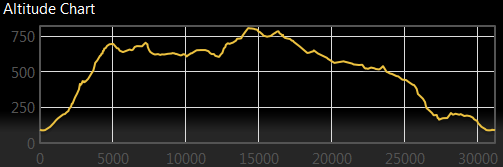
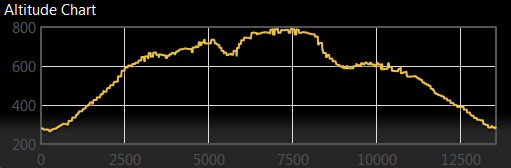
Anyway, here's the route map (via Map To GPS) and altitude profile (via GPS Visualiser) - total distance according to the GPS track log (which I have no reason to doubt) was 13.2 miles. As always, click to provide embiggenment. A small selection of photos can be found here.


Sunday, February 14, 2016

pulled off at half-time

A bit of unfortunate slapdash photo-captioning in this match summary of France's slightly unexpected 10-9 win over Ireland in the first Six Nations match on Saturday. I didn't see any of it as I was slogging up a mountain in the snow at the time (more on this later) but it sounds like it was a pretty desperate and attritional affair, only livened up - or so I gather from the photo caption below, anyway - by the spectacle of Irish outside-half Jonathan Sexton being furiously "milked" by a bald-headed member of the backroom staff. It's all part of the coaching and motivational routine, and presumably serves to settle the nerves before key place kicks.

Just in case you can't read the caption there, it reads as follows:
Johnny Sexton was frustrated to have to come just before France's match-winning try
In reality I assume there's a missing "off" before the word "just" there, but like I say I didn't see the game so I couldn't say for sure.

Friday, February 05, 2016

voodoo chilli (slight reburn)

I have a bit of a thing for spicy food, as anyone who's kept up with my periodic documentation of my Korean noodle fetish will know. That love for chilli-based stuff extends to having a few bottles of chilli sauce in the fridge, just in case anything needs spicing up at short notice. My collection doesn't begin to compare with that of my friend Jim, who has a whole kitchen cupboard full of various chilli-based weaponry, most of it probably technically illegal under some UN chemical weapons treaty. Here's my current hall of fame:


From left to right:
  • a somewhat elderly (best before some time in 2012, but I'm pretty sure no germs can survive in there) bottle of Encona West Indian chilli sauce. This is nice, quite sharp and vinegary, but still good as a plate-side dipping sauce;
  • a bottle of Flying Goose brand sriracha sauce - purchased in Tesco a couple of days ago. More on this in a minute;
  • some bog-standard Thai-style sweet chilli dipping sauce from Asda, pretty mild;
  • a bottle of Heinz-brand green sauce supposedly made from jalapeno peppers, not as fiery as you might think, and also probably a number of years past its best before date;
  • a bottle of Mama Sita's Hot Pepper Sauce - this is supposedly made from a chilli called Labuyo that is cultivated in the Philippines, very similar to Tabasco but a bit hotter;
  • your basic bog-standard Tabasco - no self-respecting bacon sandwich or Bloody Mary should be without it;
  • a bottle of Fiesta peri-peri sauce from (I think) Aldi.
I was prompted to compile this list by purchasing the bottle of sriracha sauce on a whim in Tesco a couple of days ago, and discovering that not only is it ferociously addictive, but also that there is a whole sriracha sub-culture out there engaging in furious debate about which one is the best. The original one is produced by Huy Fong in the distinctive green-topped bottles from their factory in Irwindale, southern California (in the news a year or so ago after suspicions of noxious chilli sauce fumes spilling out into the town and inconveniencing people) and is, amusingly, known in some jurisdictions (thanks to the rooster logo) as "cock sauce". Most of the imitators try to emulate the big clear bottle/green squirty top convention, including the Flying Goose brand that I've got hold of here.

These are all within what I deem to be the acceptable boundaries of good sense when it comes to chilli sauce - my rule of thumb being that if licking a few drops off your finger causes either a heart attack or severe finger and tongue blistering and the need to quaff three pints of full-fat milk afterwards, then you've strayed into the realms of comedy sauce products which are no use to anyone for any actual culinary purpose. Despite that there is a bit of an arms race going on to create things that rate highest on the Scoville scale of chilli intensity. Consider that both the sriracha and Tabasco (and probably the Encona as well) rate at about 2000-2500 Scoville units - the Mama Sita's might be a bit hotter; then consider that Dave's Insanity Sauce, one of the trailblazers for pointlessly hot and inedible sauce products, weighs in at about 180,000 units. Then consider that some of the products made by Blair's rate at over 10 million Scoville units. Then ask: why?

Thursday, February 04, 2016

the last book I read

The Man Who Fell To Earth by Walter Tevis.

A man walks into a remote Kentucky town. Not your typical Kentucky town-dweller: tall, pale, skinny. His name is Thomas Jerome Newton, and he's from another planet.

Having made a few exploratory trips into town from the site where his spaceship crash-landed to sell various items of precious metal jewellery, partly to raise some initial cash and partly to verify that he can interact with humans without being detected, Newton moves on to more ambitious pursuits, like building up a multi-million-dollar business empire off the back of various patents for technological wonders, knowledge of which he has brought with him from his home planet.

It's difficult to start and maintain such a business without becoming publicly-known, though, still less without having to trust other people to do some of the work for you. Among the people Newton chooses to trust are borderline-alcoholic housekeeper Betty-Jo and physicist Nathan Bryce. He needs Bryce's help for his Big Secret Project, which turns out to be building a spaceship - this spaceship will return to Newton's home planet Anthea (supposedly in our own solar system, though Newton is cagey about exactly where; it pretty much has to be Mars, though) which has been ravaged by war and drought, and bring back a small number of surviving Antheans to live on Earth, co-exist with humans and, through their prior experience and superior technology, save the human race from annihilating itself and rendering its planet a wasteland.

Obviously it would be unwise just to blurt all this out and expect people to go: yup, OK then, here, let me help you with that Illudium Pu-36 Explosive Space Modulator. So Newton maintains the pretence of being an eccentric, though human, businessman by continuing to wear the fake nipples and contact lenses that disguise his true form. Eventually Bryce starts to smell a rat and rigs up an X-ray machine to capture an image of Newton, weird alien internal structure and all, without his knowledge; eventually Newton is forced to confide in Bryce that yes, he's from another planet, but we come in peace and just want to help you avoid blowing yourselves up. None of that nice planet, we'll take it stuff, good lord no.

Inevitably, though, the authorities get wind of what's going on and take a more paranoid view of the whole situation. So they spirit Newton away to an undisclosed location and get down to some serious probing. Having failed either to conclusively establish that he's from another planet, or get him to confess his plans for world domination, they're obliged to let him go, but not until they've done a couple of last-minute tests on him. Unfortunately one of these tests involves shining high-power X-rays into his eyes, blinding him.

So Newton's plans for sending a ship to Anthea are thwarted. When Bryce finds him again, supping gin in a bar in New York, some sort of political crisis is happening which makes Newton's help more vital than ever. But why would Newton - blind, alcoholic, and with no hope of ever seeing anyone from his home planet again, now that the planetary alignment has shifted - want to bother helping?


The Man Who Fell To Earth (first published in 1963) is most famous for the 1976 film based on it starring David Bowie as Thomas Jerome Newton - Bowie's first major film role and probably still his most successful one, playing some drug-addled emaciated weirdo not being that much of a stretch for mid-70s Bowie. I must confess I haven't actually seen the film, but the book is a tight, fairly short and highly entertaining and provoking read. As always it's about things other than nipple-less aliens building space rockets: more general alienation, loneliness, alcoholism, the impossibility of ever really knowing anyone else, that sort of thing. It's suggested that it may be at least partly autobiographical, and the struggles with alcoholism certainly echo Tevis's own.

There are echoes of other science fiction here: the thing of a representative of a tired, weakened, enervated civilisation on its last legs but still technologically in advance of our own looking for a new start on our green and fertile planet has been done a few times elsewhere. There are also a few echoes of Algis Budrys' Who?, not least in the general Cold War paranoia, but also in the central character's being a figure of suspicion to the authorities, not conclusively enough that they can pin anything on him, but just enough for them to never be able to leave him alone.

The other Tevis in this list, The Queen's Gambit, is probably better, but this is also very good, in its understated way. My edition (featuring a picture of David Bowie from the film) is a Sight & Sound special edition that I assume was originally given away with a copy of the magazine.